


Learn all about manual handling safety — the set of procedures and best practices designed to ensure that employees can lift, carry, push and pull objects in the workplace safely.
Every day, thousands of workers across Great Britain engage in activities that require lifting, carrying, pushing or pulling objects — without giving much thought to proper technique or potential risks involved. Collectively, these activities are referred to as manual handling — the movement or supporting of a load by hand or bodily force. However, problems arise when manual handling tasks are performed incorrectly, leading to an increased risk of injuries and health complications.
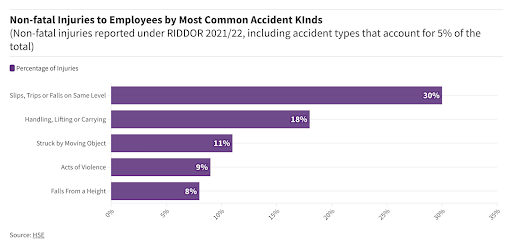
According to Unison, one in three work-related accidents is caused by manual handling, which, in turn, is the cause of back pain for 300,000 people in the UK. Meanwhile, data from the Health and Safety Executive (HSE) shows that manual handling (handling, lifting or carrying) was the second-top cause of non-fatal injury to employees in 2021/2022, accounting for 18% of all accident types. It’s no surprise that we’ve also identified manual handling as one of the seven most common health and safety risks in the workplace.
Related Reading: 7 of the Most Common Health and Safety Risks in the Workplace
Enter the critical concept of manual handling safety — these are a set of procedures and best practices designed to ensure that these tasks are carried out without harm to the individual. In this guide, we delve into the essence of manual handling safety, highlighting its importance, key principles and give tips for ensuring that every lift and move is a safe one.
What Are Manual Handling Accidents?
Manual handling tasks are common in various workplaces and daily activities, but if not performed correctly, they can lead to manual handling accidents.
These are incidents that occur when individuals are injured while lifting, carrying, pushing, or pulling objects manually, leading to injuries that range from minor strains to more severe musculoskeletal injuries. These accidents often result from improper techniques, lack of training or inadequate equipment.
Free Download For Manual Handling Template
Discover the essential guide to manual handling safety for employees with a Free Manual Handling Template
Enter your details, and we’ll email you a FREE Manual Handling Template
By submitting this form you confirm you are happy to be contacted by CHAS in accordance with our Privacy Policy
What Is Manual Handling Safety?
Manual handling safety refers to the set of guidelines, practices and procedures implemented to ensure that the tasks of lifting, carrying, pushing and pulling objects are performed in a manner that minimises the risk of injury.
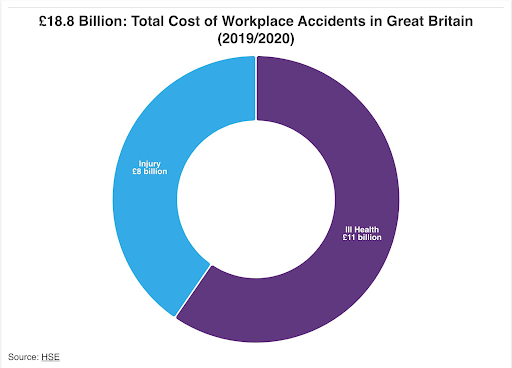
Apart from protecting the welfare of workers, manual handling safety programmes also enable employers to mitigate the financial impact of work-related injury and ill health. With the total cost of workplace accidents in Great Britain amounting to £18.8 billion in 2019/2020, employers have every reason to enact measures to make manual handling
Manual handling safety encompasses a broad range of activities, from moving boxes in the office to pushing a pallet truck in the warehouse. Whatever the case, manual handling safety aims to protect individuals from potential injuries, especially to the back, neck and shoulders, which are common problem areas when improper manual handling techniques are used.
Adhering to manual handling safety protocols involves understanding the weight and nature of the object, using correct lifting techniques, and, if necessary, employing aids or equipment to assist in the task. Proper manual handling training and awareness are crucial components of manual handling safety, ensuring that individuals are equipped with the knowledge and skills to carry out tasks safely.
Consequences Of Poor Manual Handling Safety
Improper manual handling techniques can result in a spectrum of injuries, most of which involve some kind of musculoskeletal disorder that affects muscles, nerves, tendons, joints and spinal discs. Among the most prevalent are:
- Back Injuries: These are perhaps the most commonly associated with poor manual handling. Incorrect lifting can lead to strains, sprains, and more severe conditions like herniated discs. Such injuries can be debilitating and require extensive recovery time.
- Shoulder and Neck Injuries: Lifting objects improperly can exert undue stress on the neck and shoulder muscles, leading to strains or even chronic pain if consistently mishandled.
- Repetitive Strain Injuries (RSI): These injuries develop over time and are caused by repeated improper motions. RSIs can affect various parts of the body and can be quite painful.
Recognising the early signs of injuries associated with manual handling is critical to preventing accidents and ill health. Often, initial discomfort or pain is a warning sign. By ensuring adherence to manual handling safety principles, many of these injuries can be prevented and addressed immediately.
Free Risk Assessment Template
Take the stress and confusion out of creating a risk assessment with our free template.
Enter your details, and we’ll email you a risk assessment template that’s both compliant and comprehensive to use.
By submitting this form you confirm you are happy to be contacted by CHAS in accordance with our Privacy Policy
Key Principles Of Manual Handling Safety
Manual handling safety is of paramount importance in preventing potential injuries in various settings, from workplaces to our homes. Whilst every employer will have their own approach to implementing manual handling health and safety practices, this process can generally be broken down into four principles or elements:
- Assessment: Before an employee attempts to move or lift any object, they should first assess the situation. This means understanding the weight of the object, determining its dimensions and the best way to grasp it. Training your workers to follow this process will help them decide if they need additional assistance, either in the form of other people or equipment, is required. Effective assessments minimise unforeseen challenges, making the handling process safer.
- Proper Technique: Correct technique is the cornerstone of manual handling safety. It’s not just about strength; it’s also about how you use it. Key practices include bending at the knees, keeping the object close to the body, and avoiding twisting or overreaching. Proper posture, especially maintaining a straight back, ensures that the body’s muscles work efficiently and reduces strain on vulnerable areas.
- Training: Knowledge is everything in workplace health and safety, especially in high-risk industries like construction and manufacturing. Providing workplace health and safety training will enable your teams to be acquainted with best practices in manual handling safety. And remember, training is not a one-off deal. Regular refresher courses will ensure that people will remember and apply manual handling best practices.
- Equipment: Manual strength won’t be sufficient for certain manual handling tasks. Using aids such as trolleys, hoists, or conveyor belts can make handling tasks easier and significantly safer. The key is to ensure your workers know when to use these tools and equipment, how to use them and how to check if they’re in good working condition.
Related Reading: Guide To Workplace Health And Safety Training In Construction
It’s Time To Embrace Manual Handling Safety
The key to manual handling safety is recognising the difference between a regular task and a potentially hazardous activity. For instance, carrying a box of copy paper from one office cubicle to another isn’t necessarily “risky.” However, carrying that same box down a flight of stairs is significantly more dangerous and should be discouraged. If your employees find themselves regularly engaging in manual handling activities, we strongly recommend investing in manual handling training.
For more information on manual handling safety, be sure to read the HSE’s guidance on the subject. Gain further insights and explore guides on managing health and safety risks in the workplace by following CHAS Insights. For assistance in raising your health and safety compliance standards, join CHAS, a Veriforce company. Complete our award-winning health and safety assessments and become a CHAS Standard member.

