

Explore construction risk management and uncover essential strategies to tackle common construction risks. This is your go-to guide for mastering the art of mitigating risks in the construction sector, ensuring smoother, more efficient project execution.
In the construction industry, managing construction health and safety risks isn’t just a necessity but a cornerstone of successful project execution. As one of the sectors with a notably high rate of business volatility, construction demands meticulous risk management to ensure the viability and profitability of each project.
Take the issue of health and safety, for example. According to the HSE, the construction sector saw the highest number of people killed at work in 2022/2023, with 45 work-related deaths.
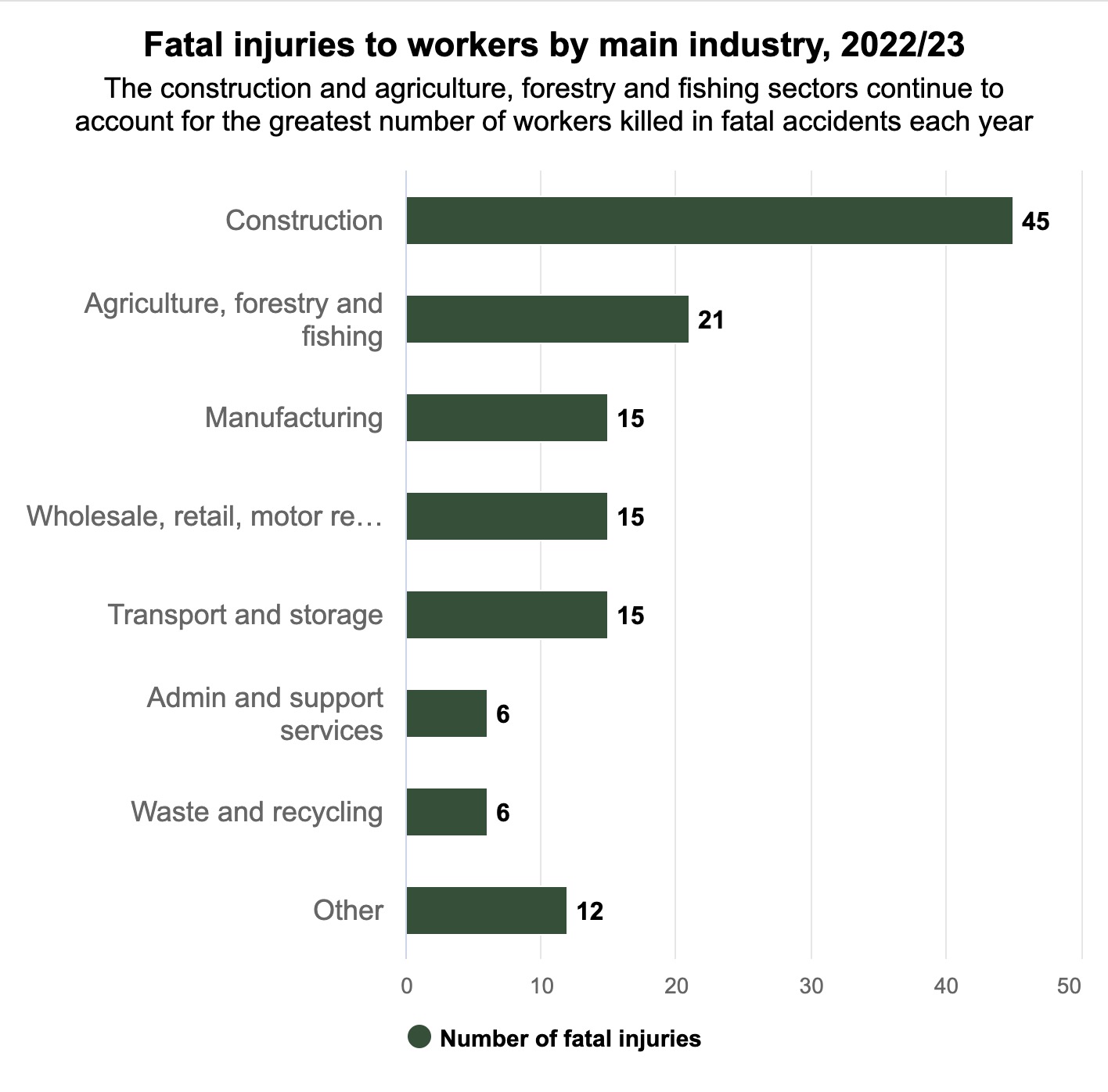
Source: HSE
But health and safety is just one of many risks to manage in construction. This post looks into some of the most common risks that construction projects face, from unavoidable delays to intricate documentation errors, and explores effective strategies for mitigating these risks.
Understanding Construction Risks
The construction industry is marked by inherent risks that can significantly impact project outcomes. Understanding these risks is paramount for any construction professional aiming to navigate this challenging landscape successfully.
The Nature Of Construction Risks
Construction risks cover various challenges, each capable of derailing a project’s schedule, budget, and quality. They range from practical issues like labour shortages and supply chain disruptions to more complex challenges such as documentation errors and change management. These risks, often interrelated, can compound and lead to significant project delays and financial losses.
Common Risks In Construction Projects:
The sheer range of construction risks is diverse and multifaceted. The key risks we’re going to look at include:
- Delays: One of the most prevalent, affecting schedules and finances.
- Documentation Errors: A significant source of disputes and rework.
- Change Management: Impacts scope, cost, and timelines.
- Subcontractor Default: Can disrupt the entire project workflow.
- Supply Chain Issues: Affect material availability and project costs.
- Poor Project Management: Leads to inefficiencies and heightened risks.
- Labour Shortages: Affects project timelines and quality of work.
- Poorly Defined Scope of Work: Leads to misunderstandings and scope creep.
- Health and Safety Hazards: Vital for legal compliance and workforce welfare.
- Payment Disputes: Affect cash flow and project viability.
In the following sections, we’ll look deeper into these risks, offering insights and strategies to mitigate them effectively, ensuring the stability and success of construction projects.
Analysing Common Construction Risks
Let’s explore some of the intricacies of common construction risks, dissecting each to understand their root causes, impacts, and mitigation strategies. Our focus isn’t only on identifying these risks but offering practical, professional guidance to resolve and minimise their effects.
By understanding the nuances of risks such as project delays, documentation errors, and supply chain issues, we can better prepare and respond, safeguarding the integrity and success of construction projects. This guide aims to equip professionals with the knowledge to manage these challenges effectively, ensuring smoother project execution and enhanced risk management.
1. Delays In Construction Projects
Delays are a prevalent and impactful risk in the construction industry. These interruptions can stem from various sources, deeply affecting project timelines and financial outcomes. Common causes of delays include:
- Poor project management
- Unforeseen challenges in permitting and inspections
- Supply chain disruptions
- Change orders, accidents
- Adverse weather conditions.
The ripple effect of these delays can be extensive, impacting the immediate schedule and the broader project ecosystem involving employees, subcontractors, and vendors.
Effective management of delays requires proactive communication and swift decision-making. By establishing clear, efficient communication processes and rapid response mechanisms, construction managers can significantly mitigate the impact of delays, maintaining project momentum and integrity.
2. Documentation Errors In Construction Projects
Documentation errors in construction projects represent a significant risk, often leading to disputes, delays, and financial losses. The Arcadis 2022 Global Construction Disputes Report highlights errors and omissions in contract documents as a prime cause of disputes worldwide.
The increasing complexity of projects, combined with pressures to expedite construction, amplifies the potential for such errors. These inaccuracies can occur in various documents, including drawings, specifications, and contracts. The repercussions extend beyond the preconstruction phase, impacting claims and payment processes.
The key to reducing this risk is meticulous document management and strategies to minimise errors, such as rigorous review processes, effective communication channels, and leveraging technological tools for accuracy. By focusing on precision in documentation, construction projects can significantly reduce the risk of costly errors and disputes.
Related Reading: What Is Pre-Construction Information?
3. Managing Change In Construction Projects
Change management is a critical aspect of mitigating construction risks. Material changes to the contract after construction commences can significantly affect project scope, timelines, and costs. When changes are initiated, whether through RFIs (Request for Information) or other means, they trigger a series of events affecting all stakeholders.
Ideally, any change should be documented and approved through a change order before work begins. However, in practice, to avoid delays, work often starts before formal approval, leading to potential payment disputes. Effective contract management in this area starts during preconstruction with thorough site investigations and accurate planning.
The solution here is simply to apply best practices in managing changes, including understanding the importance of clear communication and efficient approval processes, thereby minimising the risks associated with unapproved work and ensuring project continuity.
4. Navigating Subcontractor Default Risks In Construction Projects
Subcontractor default presents a significant risk in construction projects, especially complex projects requiring specialised skills. The default of a subcontractor can disrupt the entire project flow, particularly if their work is critical to the project’s timeline. Large projects with numerous subcontractors are particularly vulnerable to this risk.
The pressure to accelerate construction, combined with tight schedules and limited error margins, exacerbates the risk of default. The strategies to mitigate subcontractor default risks include:
- Thorough vetting processes
- Clear contractual agreements
- Effective communication channels
- Regular performance reviews
- Contingency planning.
By proactively managing these construction risks, projects can maintain momentum and reduce the likelihood of costly delays and disruptions.
5. Addressing Supply Chain Issues In Construction Projects

Supply chain disruptions pose significant construction risks, impacting both schedules and budgets. Since the COVID-19 pandemic, the construction industry has faced continuous supply chain risk management issues, from material shortages to volatile pricing.
These disruptions can arise from shipping issues, natural disasters, and economic fluctuations. The good news is that there are strategies for managing these risks, such as:
- Implementing flexible supply chain practices
- Incorporating escalation clauses in contracts
- Closely monitoring global supply chain developments
- Strengthening relationships with key suppliers
- Using local suppliers
- Supply chain visibility and predictive analytics technology
- Inventory management strategies.
By adopting a proactive approach to supply chain management, construction projects can better navigate these uncertainties, maintaining both timelines and cost-effectiveness.
Free Risk Assessment Template
Take the stress and confusion out of creating a risk assessment with our free template.
Enter your details, and we’ll email you a risk assessment template that’s both compliant and comprehensive to use.
By submitting this form you confirm you are happy to be contacted by CHAS in accordance with our Privacy Policy
6. Mitigating Risks From Poor Project Management In Construction
Poor project management is a critical risk in construction, leading to a cascade of issues like miscommunication, delays, and increased costs. Ineffective management can disrupt the project at hand and impact the broader network of ongoing projects.
This highlights the importance of strong project management practices in mitigating construction risks. Key strategies include:
- Clear role definition
- Effective scheduling
- Proactive communication
- Robust oversight mechanisms
- Continuous training and development
- Stakeholder engagement
- Quality control processes
- Feedback mechanisms.
By strengthening project management approaches, construction projects can significantly reduce the risk of delays, cost overruns, and quality issues, ensuring smoother, more efficient project execution.
7. Tackling Labour Shortages In Construction Projects
Labour shortages present a significant risk in the construction industry, affecting projects of all sizes. The challenge of securing qualified and reliable labour can lead to project delays, reduced work quality, and increased costs. There are many effective strategies to mitigate the risks associated with labour shortages.
From the importance of proactive workforce planning to the cultivation of skilled labour pools and the adoption of advanced technologies to optimise labour efficiency, construction risks related to labour can be dramatically reduced or avoided entirely.
By addressing these labour challenges head-on, construction projects can enhance their resilience against the unpredictable nature of labour availability and maintain project timelines and quality standards.
Related Reading: Tackling the Skills Shortage in Construction
8. Addressing Poorly Defined Scope Of Work In Construction Projects
A poorly defined scope of work is a significant construction risk, often leading to misunderstandings, scope creep, and financial losses. The solution is:
- Detailed initial planning
- Fostering effective communication between stakeholders
- Implementing robust change management processes
- Incorporation of expert input
- Regular scope reviews
- Documented scope agreements
- Training on scope management.
By establishing a clear and comprehensive scope of work, construction projects can significantly reduce the risks of cost overruns and project delays.
9. Managing Health And Safety Hazards In Construction Projects

Health and safety hazards in construction represent a substantial risk, necessitating rigorous management to ensure worker safety and project compliance. Effective management of these risks, including the basics like manual handling injuries, involves implementing comprehensive safety protocols, providing regular training, and adhering to regulatory standards.
Key measures include conducting detailed risk assessments, using appropriate safety equipment, and continuous monitoring to prevent accidents. Prioritising health and safety is crucial in mitigating construction risks, as it protects the workforce and minimises legal liabilities and maintains project integrity.
Related Reading: What Are The Most Common Manual Handling Injuries?
10. Payment Disputes: Ensuring Fair And Timely Compensation
Payment disputes are a notable risk in construction, impacting cash flow and overall project viability. These disputes can arise from various sources, including funding delays, change orders, and work quality disagreements. Effectively managing these risks involves comprehensive documentation, clear communication, and strict adherence to contract requirements.
By maintaining detailed records and ensuring transparent interactions among all parties, construction projects can significantly reduce the likelihood of payment disputes. This approach protects financial interests and encourages trust and efficiency in the construction process.
Practical Steps For Risk Mitigation In Construction Projects
In managing construction risks, adopting a strategic and methodical approach is key. Here’s a breakdown of practical steps that you can consider.
Health And Safety Protocols:
- Conduct regular safety training and audits
- Ensure compliance with safety regulations
- Conduct regular, ongoing onsite risk assessments and risk assessment training.
Effective Communication For Change Management:
- Establish clear channels for reporting and addressing changes
- Implement systematic approval processes for change orders.
Building A Resilient Supply Chain:
- Diversify suppliers to mitigate material shortages and common supply chain disruptions
- Incorporate flexible clauses in contracts for material cost fluctuations.
Enhancing Project Management:
- Utilise project management software for better coordination
- Schedule regular project reviews to identify potential risks early.
Addressing Labour Shortages:
- Develop training programs to build a skilled workforce
- Plan for contingencies to cover unexpected labour gaps.
Defining Work Scope Clearly:
- Document and agree upon detailed project scopes with all stakeholders
- Regularly review project scope to manage scope creep effectively.
By implementing these steps, construction projects can significantly reduce risks, ensuring smoother operations and successful project completion.
Navigating Construction Risks For A Successful 2024
Considering the complexities of the construction industry, understanding and mitigating risks remains paramount. This exploration of construction risks provides valuable insights into effectively managing the challenges ahead in 2024.
Are you looking to deepen your understanding of the evolving landscape of construction risks? Our blog post, “3 Challenges Facing the UK Construction Industry In 2024”, offers an in-depth look at what the future holds.
Veriforce CHAS is dedicated to guiding organisations through the latest regulatory and compliance changes in health and safety and risk management. Become a CHAS Client to get exclusive access to our pool of suitably compliant contractors and begin raising your risk management standards. Give our award-winning team a call on 0345 521 9111, and let’s start with a conversation.
Free Safety Method Evaluation Statement
Use our free safety method statement evaluation template to ensure your teams are health and safety compliant.
Enter your details and receive your free safety method evaluation statement template in your inbox.
By submitting this form you confirm you are happy to be contacted by CHAS in accordance with our Privacy Policy

