


With increased scrutiny from regulatory bodies, employers must revisit and fully comprehend the Personal Protective Equipment at Work Regulations to avoid non-compliance and ensure a safe workplace in 2025.
Workplace safety is a fundamental concern for every responsible employer, underpinning productivity, reputation, and regulatory compliance. Personal Protective Equipment (PPE), such as helmets, goggles, gloves, and respiratory protection, is essential for safeguarding workers against potential hazards, especially in high-risk industries like construction.
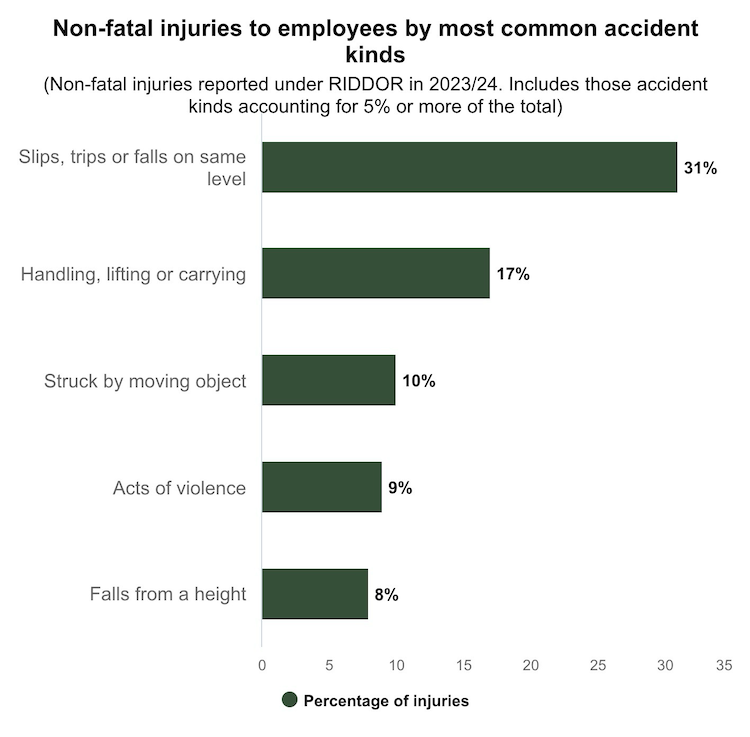
Source: Health and Safety Executive
According to the Health and Safety Executive (HSE), there were 604,000 non-fatal injuries to workers in 2023/2024, most of which resulted from slips, trips and falls, as well as incidents involving handling, lifting, or carrying. These types of accidents are a clear reminder of why PPE remains so important in high-risk environments
Related Reading: What Health And Safety Legislation Should All Employers Know About?
Understanding PPE At Work Regulations
The Personal Protective Equipment at Work Regulations 1992 established the fundamental duties employers have regarding PPE. They mandate employers to:
- Provide suitable PPE free of charge.
- Ensure PPE adequately protects against specific workplace hazards.
- Maintain PPE in good working condition.
Significant updates came through The Personal Protective Equipment at Work (Amendment) Regulations 2022, expanding PPE responsibilities to include “limb (b)” workers — those on casual, irregular, or zero-hour contracts.
Related Reading: Updated PPE Regulations: What You Need To Know
Employers must recognise that PPE should always be considered the last line of defence after other risk mitigation methods, such as engineering controls or administrative adjustments, have been exhausted.
Free Contractors Compliance Checklist
This useful health and safety tool is a quick and easy way to help ensure all contractors arriving on-site have their compliance status checked.
Enter your details, and we’ll email you a free checklist that’s ready to use.
By submitting this form you confirm you are happy to be contacted by CHAS in accordance with our Privacy Policy
What’s New Or Changing With PPE At Work Regulations In 2025?
While no entirely new PPE regulations have been announced for 2025, the HSE continues to emphasise the importance of maintaining strict compliance with existing PPE regulations. Employers should remain vigilant and prioritise:
- Accurate recordkeeping.
- Thorough suitability assessments.
- Consistent and effective PPE training.
Maintaining high standards in these areas will help businesses stay prepared for routine inspections and demonstrate proactive adherence to established regulatory requirements.
Employer Responsibilities Under The PPE At Work Regulations
1. Provision Of PPE
Employers must supply suitable PPE without cost to employees and workers, ensuring that:
- PPE adequately fits the individual.
- PPE is suitable for the task.
- PPE protects effectively against workplace hazards.
These may seem like basic requirements, but PPE issues are more common than you think. For example, there is a prevailing one-size-fits-all approach to PPE that fails to account for anatomical differences between men and women. This results in female workers facing greater health and safety risks due to poorly-fitting PPE.
Related Reading: Why PPE For Women Is A Major Issue In Construction
2. Training And Instruction
Beyond provision, employers are legally obliged to deliver comprehensive training in PPE usage, maintenance, and storage. Regular reinforcement training and assessments ensure sustained compliance and effectiveness in PPE use.
3. Maintenance And Replacement
Maintaining PPE in good condition is essential to compliance. Employers must:
- Regularly inspect and clean PPE.
- Replace any PPE that is damaged or expired.
- Ensure PPE is stored appropriately to prevent degradation.
4. Assessment And Documentation
Conducting and documenting thorough risk assessments that include PPE evaluations ensures compliance with the PPE at Work Regulations and provides critical evidence during regulatory audits.
What Is The Role Of PPE In Risk Management?
PPE is recognised within health and safety management systems as the final protective barrier. Its integration with broader risk management practices, such as those outlined in the Control of Substances Hazardous to Health Regulations (COSHH) and Work at Height Regulations (2005), is essential for comprehensive workplace safety.
PPE Non-Compliance Case StudyEmployers that fail to integrate PPE within their risk management framework are at a higher risk of incidents, fines, or reputational damage. In March 2025, inadequate respiratory PPE led to a fine of £63,000 plus costs against London property developer Nofax Enterprises Limited. The HSE found the company had failed to protect workers from inadequate fire safety measures, excessive silica dust exposure, and multiple risks associated with working at height. |
PPE Compliance and Enforcement in 2025
The HSE has long signalled a zero-tolerance stance towards PPE non-compliance. Common issues include:
- Inadequate recordkeeping.
- PPE misuse due to insufficient training.
- Failure to replace outdated or damaged PPE.
Penalties include significant fines, prohibition notices, and potential legal prosecution, as illustrated by recent enforcement actions in the HSE Enforcement Notices Database.
How to Stay Ahead: How Employers Can Comply With PPE At Work Regulations
Employers are recommended to:
- Perform regular PPE audits to ensure compliance and identify gaps.
- Implement a documented PPE policy, clearly outlining roles and responsibilities.
- Provide regular, comprehensive PPE training and maintain robust records.
- Partner with suppliers and contractors verified through compliance specialists such as Veriforce CHAS.
PPE Is A Compliance Issue And A Culture Issue
Compliance with PPE at Work Regulations extends beyond legal necessity; it signifies a commitment to safety culture within an organisation. Employers should leverage 2025 as an opportunity to reinforce workplace safety culture through proactive compliance and thorough engagement with employees on PPE practices.
Ensure your organisation remains compliant with the Personal Protective Equipment at Work Regulations in 2025. Conduct an immediate PPE assessment or speak with a compliance specialist at Veriforce CHAS to protect your workforce, reputation, and operations.
Be sure to follow Veriforce CHAS Insights to discover more insights about PPE compliance and health and safety in the workplace. For access to resources to improve your health and safety performance, join Veriforce CHAS today and demonstrate your risk management compliance.
Free Health & Safety Policy Checklist
Ensure your health and safety policy covers all the key areas with a checklist that’s simple to understand.
Enter your details, and we’ll email you a health and safety checklist that includes step by step details of what you should include in your policy.
By submitting this form you confirm you are happy to be contacted by CHAS in accordance with our Privacy Policy

