


For many years, the construction industry has consistently been among the most dangerous sectors to work for in Great Britain. HSE statistics show that in 2021, construction had the second-highest rate of workplace injuries — agriculture, forestry, and fishing led all industries in terms of work-related injuries.
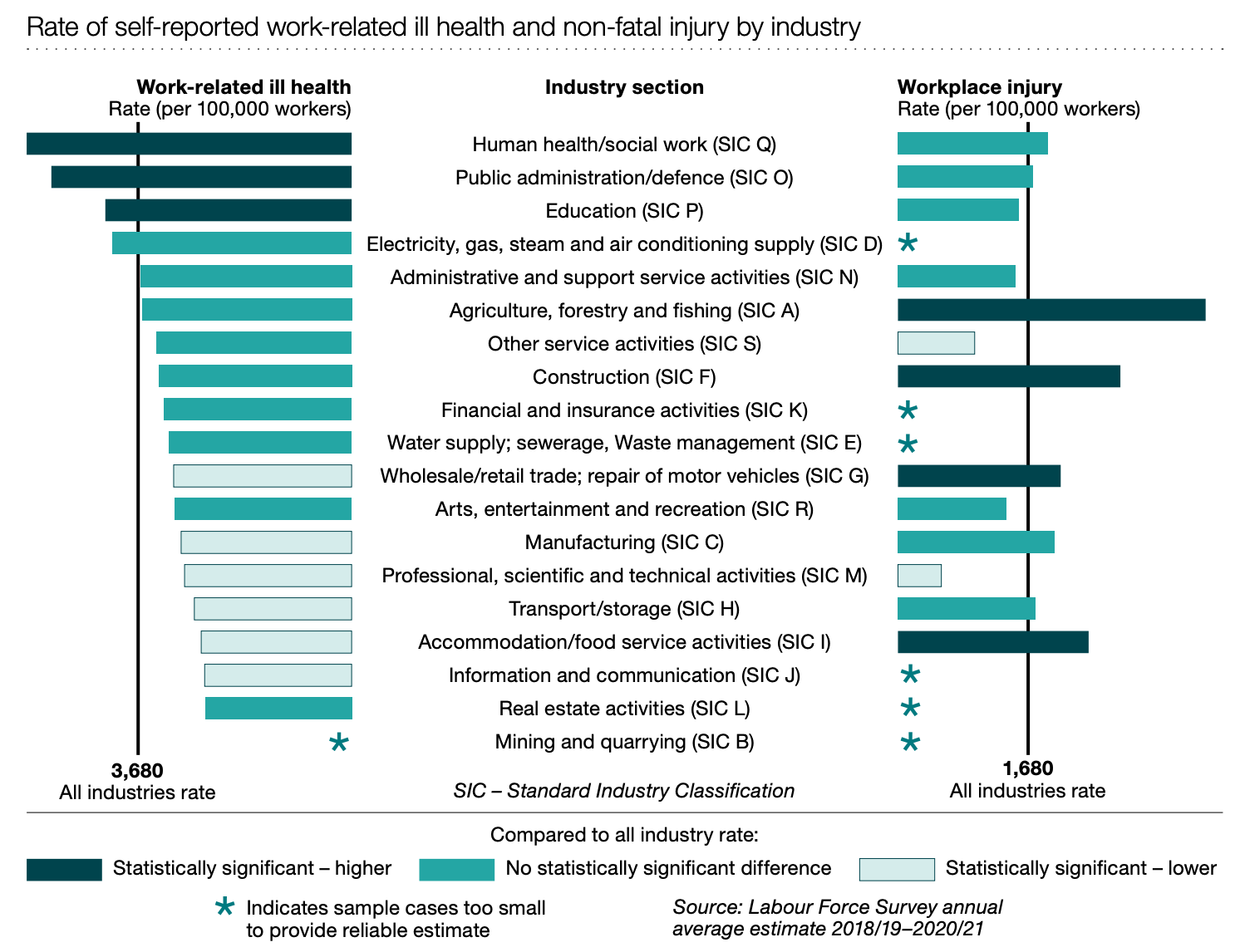
Image from HSE
Meanwhile, a closer look at Britain’s construction sector reveals that 2021 saw 61,000 cases of non-fatal work-related injuries. Slips and trips were the most common type of construction injury, whilst the incidence rate of falls from a height (19%) was more than double the rate of all industries (8%).
These dangers underscore the importance of managing health and safety in construction and the value of health and safety accreditation. To help you keep your general workplace and construction sites safer, we’ve put together a list of health and safety management trends to watch out for in 2022 and beyond.
But first, it’s important to understand what health and safety mean in the workplace.
Related Reading: Who Is Responsible For Workplace Health And Safety?
What Is Workplace Health And Safety?
Workplace health and safety refers to an expansive set of principles, practices and attitudes focussed on managing health and safety risks to workers, customers and the public. In the construction sector, health and safety practices in the workplace seek to mitigate hazards in building sites, including (but not limited to):
- Manual handling (i.e. carrying, lifting, pushing and pulling) of objects
- Heights
- Noise
- Vibration
- Skin hazards (e.g. chemicals, hot hazards)
- Biological hazards
- Fire safety
- Asbestos
- Dust
- Paint and coatings.
Get a complete understanding of the many health and safety risks in construction by reading the HSE guide: Health and safety in construction.
The high-risk nature of construction projects means that companies need to take leadership and create a strong health and safety culture, which also means getting feedback from managers, workers, subcontractors and customers.
Related Reading: What Is Safety Culture? Your Guide To Positive Safety Culture.
Trends For Managing Health And Safety In Construction
1. Working From Home
The sudden exodus to remote work came as a shock to the construction industry — a survey found that nearly half of the 20,000 UK construction workers said they had no remote work experience before the pandemic. Organisations eventually caught up thanks in large part to the adoption of remote work technology and set-ups such as “digital twins,” where digital replicas of construction projects enable on-site and remote teams to collaborate.
All this has set the stage is for remote work to become permanent (or at least partially).
But construction companies need to remember that remote work also comes with its own health and safety responsibilities as part of their duty of care. HSE recommends employers include the following aspects of health and safety in their risk assessments for home workers:
- Stress and poor mental health
- Using equipment like computers and laptops safely
- Their working environment.
The agency also has guidance for remote workers themselves.
2. Wearables And The Internet Of Things (IoT)
The Internet of Things (IoT) is an ecosystem of computing devices that enable you to create wireless networks of interconnected mechanical and digital machines, objects and people. This allows devices and construction equipment to “talk” to each other in real-time and capture data about potential workplace hazards, equipment failure and other workplace risks.
Wearables are arguably the most accessible pathway to adopting IoT in the construction industry. These include:
- Hard hats with proximity sensors and location tracking
- Wristwatches that monitor hand and arm vibrations
- Health devices that measure core body temperature and average heart rate
- Tracking devices that monitor job-site movement to detect patterns in accidents.
The HSE has already picked up on the potential of wearable devices to improve workplace health and safety. According to agency report:
“There is growing evidence that wearable devices can significantly benefit health and safety in the workplace through positioning and sensor technologies. The advancement of the Internet of Things has meant that many of these technologies are increasingly being deployed, helping to improve workplace productivity”
— Shared Research Project, Wearables in the workplace
3. Employee Well-Being Comes Under Focus
The need to include mental health in general workplace health and safety has come under focus. The pandemic made it clear that limiting social interactions increases the risk of stress, anxiety and depression.
Fortunately, more employers are making an effort to view workplace health and safety as more than just physical health. According to CIPD’s Health and wellbeing at work 2021 survey report, 75% of employees agreed that employee well-being is on their senior leaders’ agendas — up from 61% last year.
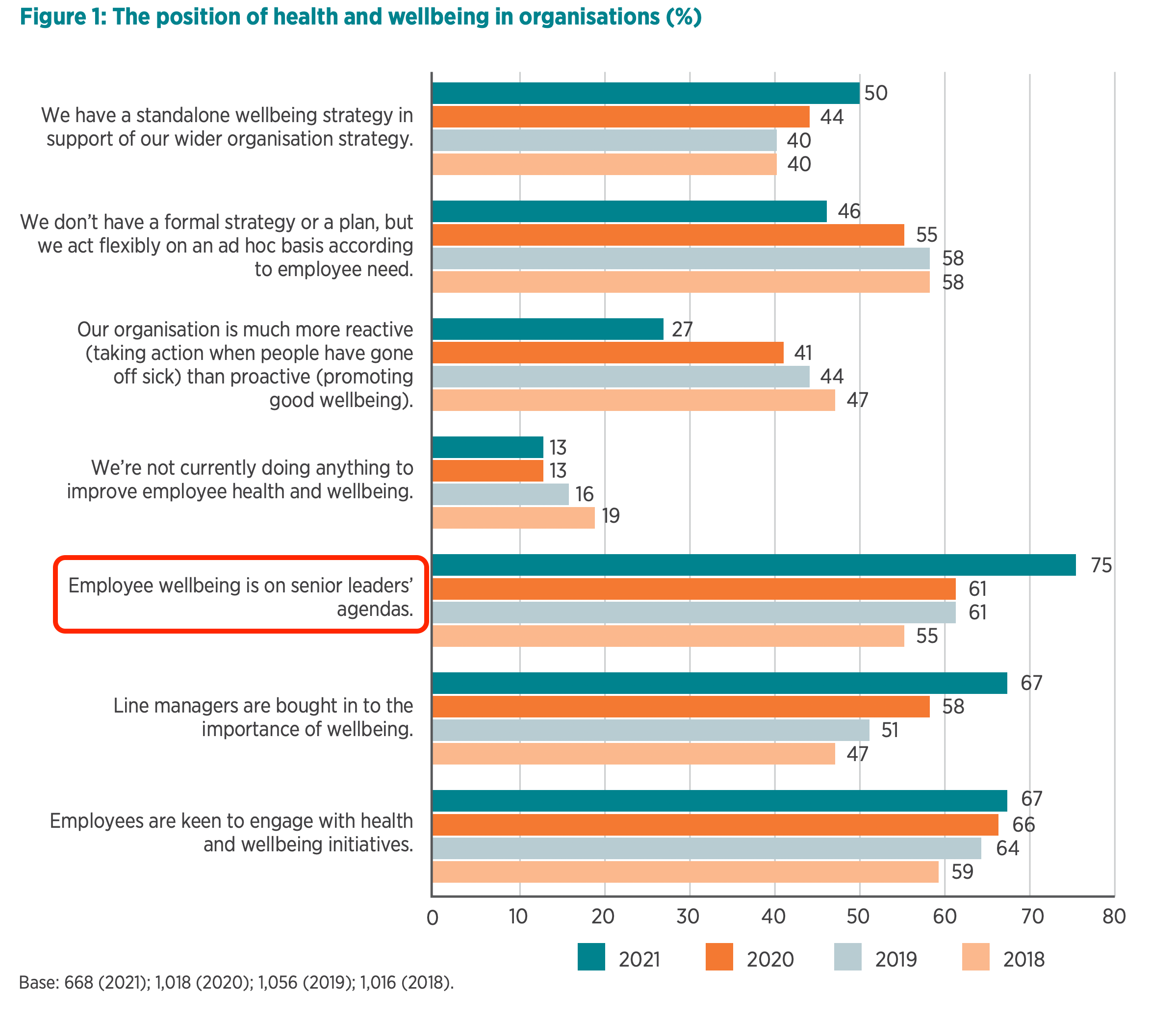
Image from CIPD
Mental health, which we identified as one of 10 Issues Affecting Construction Supply Chains In 2022, also received special attention — 77% agreed their organisations actively promote well-being.
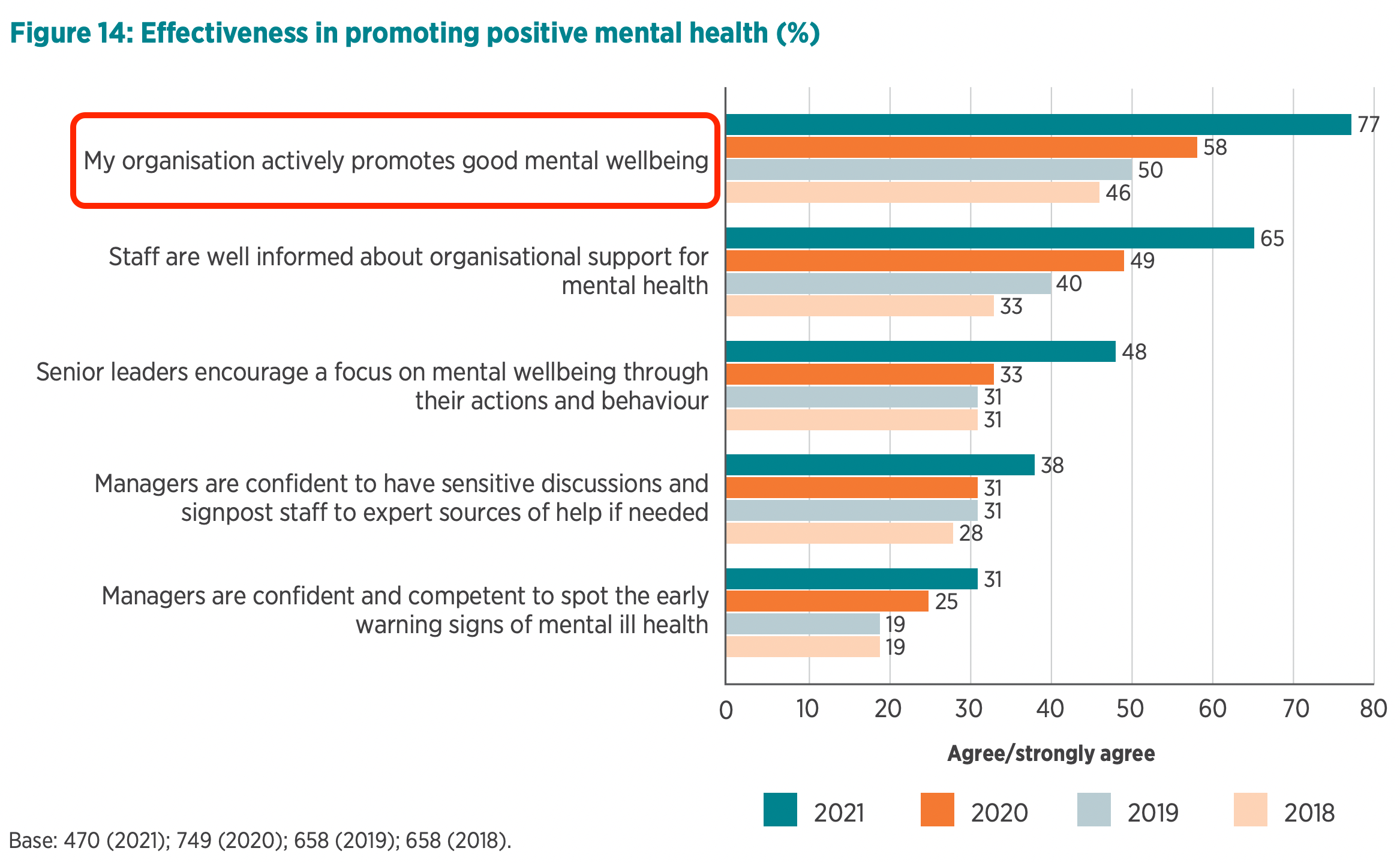
Image from CIPD
The HSE is also taking steps to help employers recognise the signs of work-related stress. Announced in November 2021, the HSE’s Working Minds campaign seeks to “encourage employers to promote good mental health in work.” The campaign specifically targets businesses in five sectors: agriculture, health, manufacturing, motor trade (repairs) and — you guessed it — construction.
Take A Proactive Approach To Managing Health And Safety In Construction
Difficult lessons learned from the pandemic and the inherent health and safety risks of construction job sites present multiple challenges for firms and building contractors looking to create a safer working environment. All these make it critical for employers to do their due diligence and adapt to the changing needs of their workers.
Be sure to follow the CHAS blog to get more insights on health and safety in the construction industry. You can also take the first step to improve health and safety standards in your organisation by joining CHAS and achieving the Common Assessment Standard. As a CHAS member, you will gain access to risk management tools, materials and nationally-recognised accreditation programmes to mitigate risks in up to 13 areas of risk management — health and safety included.
Get A Free Health Surveillance Template
Are you wondering whether you should adjust your Health Surveillance procedures for your project?
Enter your details to download our free Health Surveillance Template.
By submitting this form you confirm you are happy to be contacted by CHAS in accordance with our Privacy Policy

