


In this guide, we break down the most common types of procurement in construction to help you develop a better understanding of how supply chains work in the construction industry.
It’s no secret that supply chains in the construction industry are complex, often involving a multitude of suppliers, contractors and subcontractors from different sectors and parts of the world. At the centre of it all is procurement, without which it would be impossible for most construction operations to function.
Procurement is also the lynchpin of the construction industry’s profitability. The public sector, for example, spent a record £29 billion with construction suppliers in September 2021 — a 15% increase over the previous year, according to research by Tussell.
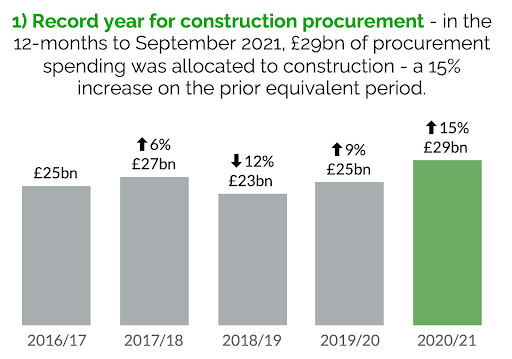
Source: Russell
What Is Construction Procurement?
Procurement in construction involves the process of acquiring goods and services needed for a construction project. It is a strategic function that ensures projects are delivered on time, within budget, and to the required quality standards. Key steps in construction procurement include:
- Defining Project Needs: Identifying the materials, services, and resources required to complete the project.
- Strategic Planning: Developing a procurement plan that aligns with project goals and timelines.
- Market Engagement: Researching potential suppliers and contractors, assessing capabilities, and understanding market conditions.
- Contract Negotiation: Agreeing on terms, prices, timelines, and responsibilities with chosen suppliers or contractors.
- Logistics and Delivery: Coordinating the delivery of materials and services to ensure they arrive on site when needed.
- Risk Management: Identifying potential risks in the supply chain and implementing measures to mitigate them.
Related Reading: What Is A Contractor?
Key Aspects Of Construction Procurement
When managing procurement for a construction project, several key aspects need to be considered to ensure a successful outcome:
- Project Specifics: Tailor procurement strategies to the project’s type, scale, and complexity.
- Budget and Quality: Ensure costs are controlled while maintaining the required quality of materials and services.
- Time and Efficiency: Minimise delays in sourcing, delivery, and installation to keep the project on schedule.
Risk Mitigation: Assess potential risks, such as supply chain disruptions, contractor failure, or safety hazards, and plan accordingly.
The procurement process is critical to the success of a construction project because it ensures all necessary materials and services are obtained at the best possible price. A well-organised procurement process can also help to speed up the overall construction timeline.
Types Of Procurement Methods In Construction
There are several different types of procurement methods used in construction, each with its own pros and cons.
1. Single-Source Procurement
Single-source procurement is when a construction company procures all of their materials and services from one supplier. This option is often used when the company has a good relationship with the supplier and trusts them to provide quality materials and services.
Benefits of single-source procurement include:
- Lower pricing, as all requirements are consolidated with one supplier
- Consistent quality (or at least quality that meets expectations)
- Faster purchasing times due to communication with a single supplier
- Easier measurement of supplier performance.
2. Multiple-Source Procurement
As the name suggests, multiple-source procurement is a system in which construction companies procure materials, goods and services from multiple suppliers. This option is often used when the company wants to compare prices and quality before making a final procurement decision.
Distribution of risk is perhaps the biggest benefit of multiple-source procurement. By having a network of multiple contractors/suppliers, you can spread risk and have a safety net should one of your supply chain players run into difficulties.
Related Reading: Champions Guide To Winning Construction Contracts
3. Two-Stage Tender
A two-stage tender is when a construction company first provides a list of requirements to potential contractors or suppliers, who then submit their prices for the project.
After reviewing the prices, the construction company invites the most promising contractors/suppliers to submit a more detailed proposal. This option is often used when the scope of work is complex and the construction company wants a better idea of pricing before making a decision.
Related Reading: What Is A PQQ Tender In Construction?
For clients, two-stage tenders offer the benefit of involving contractors or suppliers as early as possible, ensuring the “buildability” of a project. This also makes it possible for contractors/suppliers to start on site earlier.
4. Selective Tendering
Selective tendering, also known as restrictive tendering, is when a construction company invites only pre-qualified suppliers to submit bids for the project. This option is often used when the scope of work is complex or sensitive and the company wants to limit the number of suppliers who have access to the information.
Related Reading: How Do Contractors Get Clients? Guide To Getting More Work
Selective tendering is ideal for complex contracts where only a few firms can meet the client’s needs. Limiting the number of bids also improves bid quality, saving both time and procurement costs.
5. Open Tendering
Open tendering is when a construction company invites any interested supplier to submit a bid for the project. This option is often used when the scope of work is relatively simple and there are many potential suppliers who could provide the necessary materials and services.
6. Negotiated Contracting
Negotiated contracting is when a construction company negotiates a contract directly with a supplier without going through a formal bidding process. This option is often used when the scope of work is complex or sensitive and the company wants to ensure they are getting the best possible price for the project.
The best type of procurement in a construction project will depend on the specific needs of the project. Ultimately, the goal for clients is to choose a method that will result in the best value for the project while still meeting all other requirements.
Speed Up Procurement With Supply Chain Risk Management Compliance
It’s not unusual for buyer-based clients to spend several weeks researching contractors and suppliers and waiting for responses from firms. There are no shortcuts to this process — clients must do their due diligence when going through bids.
One way for contractors and suppliers to stand out from the competition is through accreditation and verification schemes. At CHAS, we offer the Common Assessment Standard under CHAS Elite, the elite standard of accreditation for contractors in the construction industry that covers 13 areas of risk management. We also have Verified Supplier, a verification service tailored to the needs of materials suppliers.
Related Reading: How Accreditations Can Speed Up Your Procurement Process
Check CHAS Insights to discover more insights about procurement and winning contracts in the construction industry. You can also speak to a CHAS advisor to discuss your options for CHAS accreditation and verification.

Achieve the Industry’s highest recognised accreditation, backed by Build UK & CECA with CHAS Elite
The Common Assessment Standard streamlines the construction supply chain and makes it easier for companies to achieve compliance and gain accreditation.

