
Energy risks can be broadly categorised into operational, financial, regulatory and environmental risks. Each category encompasses specific challenges — from equipment failure and supply chain disruptions to fluctuating market prices, regulatory changes, and environmental impacts. Recognising these types helps in tailoring precise management strategies. Let’s take a quick look before getting into specifics.
- Operational risks: These refer to the potential for loss resulting from inadequate or failed internal processes, people and systems or from external events. This includes technical failures, human errors and accidents that can disrupt operations.
- Financial risks: The energy industry faces financial risks stemming from market volatility, credit risks and liquidity concerns. Understanding these financial dynamics is crucial for maintaining economic stability and forecasting future trends.
- Regulatory risks: Regulatory risks involve changes in laws, regulations or policies that could affect energy operations, costs or compliance requirements. Staying informed and adaptable is key to managing this constant change.
- Environmental risks: As you might expect, environmental risks are concerned with the impact of energy production and consumption on the natural environment. These include pollution, habitat destruction and climate change implications, emphasising the need for sustainable practices.
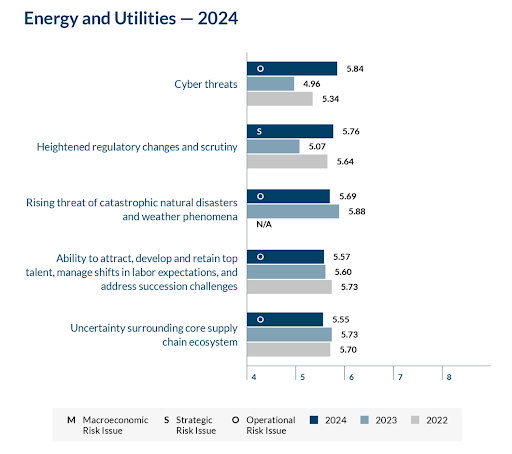
According to research from Protiviti Global Business Consulting, leaders in the energy and utilities sector prioritised operational challenges in 2023. This trend continues into 2024 but with a new addition high on the agenda. In what is now a strategic concern, increased regulatory changes and scrutiny rank second among the top five risks. Remarkably, this issue has leapt from the 16th position in 2023 to become a key focus area.