

The manufacturing sector is the cornerstone of the global economy and it’s responsible for driving innovation and production across a wealth of sectors. However, it’s also one of the most hazardous industries, with 91,000 of the manufacturing industry’s workforce suffering from work-related ill health between 2020 and 2023.
Health and safety in manufacturing is vital to protect workers, ensure regulatory compliance and maintain operational efficiency. In this comprehensive guide, we’ll provide an in-depth look at health and safety in the manufacturing sector, its importance, the common hazards and best practices for mitigating risk.
The Importance Of Health And Safety In Manufacturing
Protection For Workers
One of the reasons why health and safety in the manufacturing industry is so important is to ensure a safer environment for workers. The sector often involves using heavy machinery, handling hazardous substances and it can also be incredibly physically demanding. All of these factors can pose a significant risk to workers which is why it’s vital to make sure robust health and safety measures are in force to protect workers from injuries and illnesses.
Regulatory Compliance
Adhering to health and safety regulations isn’t just a moral obligation, it’s a legal one too. Ensuring compliance with standards set by regulatory bodies such as the Health and Safety Executive (HSE) in the UK helps to prevent accidents and ensure a safe workplace. Non-compliance can result in hefty fines, legal action and damage to your company’s reputation.
Operational Efficiency
A safe working environment can contribute to operational efficiency by minimising downtime caused by accidents and injuries. Not to mention, healthy workers are more productive and less likely to take time off due to work-related illnesses. Implementing health and safety measures can lead to improved worker morale, reduced absences and higher productivity.
Economic Impact
In the manufacturing sector alone, the total cost of work-related ill health and injuries is estimated at £1.4 billion, accounting for 7% of the total cost of all work-related ill health and injuries in the UK. Investing in health and safety measures for your manufacturing business can reduce these costs by preventing accidents and illnesses and could save you money in the long run.
Reputation Management
A good safety record can go a long way in terms of your business’s reputation. Companies with strong health and safety practices tend to be viewed more favourably by prospective clients, workers and stakeholders. Investing in your manufacturing health and safety can lead to increased business opportunities and provide you with a competitive edge in the current market.
Free Risk Assessment Template
Take the stress and confusion out of creating a risk assessment with our free template.
Enter your details, and we’ll email you a risk assessment template that’s both compliant and comprehensive to use.
By submitting this form you confirm you are happy to be contacted by CHAS in accordance with our Privacy Policy
5 Most Common Hazards In Manufacturing
1. Physical Hazards
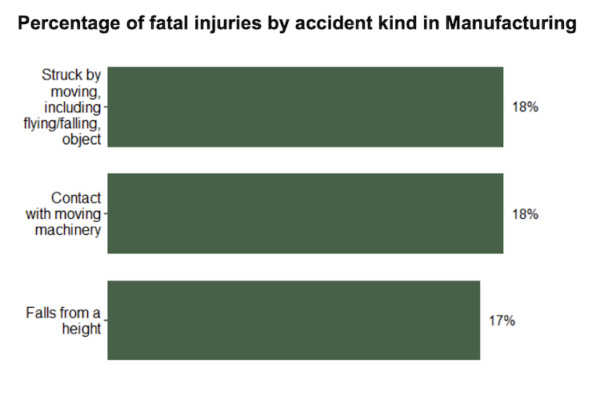
Physical hazards are some of the most common in the manufacturing sector. These include machinery, tools and manual handling tasks. In 2022/23, 18% of manufacturing-related fatal injuries were caused by contact with moving machinery. Ensuring proper machine guarding, regular maintenance and safe handling procedures can mitigate these risks.
2. Chemical Hazards
Manufacturing processes can include using and handling hazardous chemicals which can pose significant risks if not managed properly. Exposure to harmful substances can lead to respiratory issues, skin conditions and other health problems. To mitigate these risks, the Control of Substances Hazardous to Health (COSHH) Regulations provide a comprehensive framework for controlling exposure to hazardous materials and ensuring workplace safety. These include measures such as: proper storage, handling procedures, personal protective equipment (PPE), installing ventilation systems, emergency procedures and risk assessments. Adhering to COSHH regulations is crucial in managing the risk of chemical hazards.
3. Ergonomic Hazards
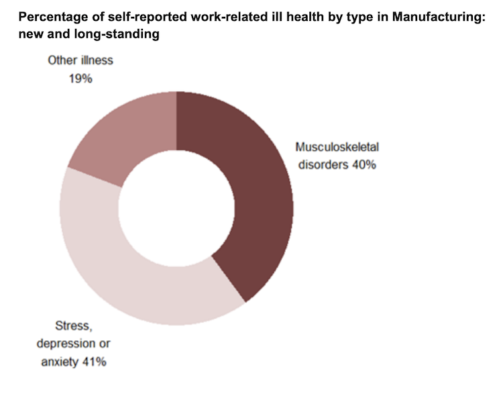
Ergonomic hazards can result from repetitive tasks, improper workstation setups and poor posture. If left unchecked, these can lead to musculoskeletal disorders (MSDs), which account for 40% of work-related ill health cases in the manufacturing sector. Ergonomic assessments and interventions such as providing adjustable workstations and teaching proper lifting techniques can help to prevent these disorders.
4. Electrical Hazards
Electrical hazards are common in manufacturing due to the widespread use of electrical equipment and machinery. Risks can include electric shocks, burns and fires. Regular inspections and maintenance of electrical systems, along with proper training for workers are essential to prevent electrical accidents.
5. Other Hazards
Other hazards in manufacturing include slips, trips and falls which are the most common causes of non-fatal injuries, accounting for 25% of incidents. Handling injuries (20%), being struck by moving objects (14%) and contact with moving machinery (12%) are also significant hazards. Implementing housekeeping practices, proper training, ensuring high standards of workplace cleanliness and safety protocols can reduce these risks.
3. Statistics On Health And Safety In Manufacturing
Understanding the statistics surrounding health and safety in the manufacturing sector provides a clearer picture of the challenges and areas of improvement.
Here are some key facts taken from HSE’s annual Manufacturing Statistics in Great Britain, 2023:
Work-Related Ill Health
- 91,000 workers in the manufacturing sector suffered from work-related ill health between 2020 and 2023. This highlights the ongoing health risks faced by workers in the industry.
- Of those suffering from work-related ill health, 40% were musculoskeletal disorders.
- Around 3,000 workers suffered from work-related breathing or lung problems, emphasising the need for proper ventilation and respiratory protection.
- Stress, depression or anxiety accounted for 41% of all work-related ill health cases, underscoring the importance of mental health initiatives in the workplace.
Fatal Injuries
- In 2022/23, there were 15 fatal injuries in the manufacturing sector, with leading causes being struck by moving/flying/falling objects (18%), contact with moving machinery (18%) and falls from height (17%). This is lower than the annual average of 19 fatalities over the five-year period from 2018-2023.
Non-Fatal Injuries
- On average, 46,000 manufacturing workers sustained non-fatal injuries at work over the three-year period from 2020 – 2023. The most common causes were slips, trips and falls (25%); injuries caused by handling, lifting or carrying (20%); being struck by a moving object (14%) and contact with moving machinery (12%).

4. Implementing Health And Safety Measures
Risk Assessment
Conducting thorough risk assessments is the first step in implementing manufacturing health and safety measures. Risk assessments identify potential hazards, assess the likelihood and severity of harm and determine the necessary control measures to mitigate risks. Regular reviews and updates of risk assessments ensure they remain relevant and effective.
Training And Awareness
Training and awareness programs are crucial for helping workers understand the risks they face and how best to protect themselves. Training should cover the proper use of equipment, safe handling of hazardous substances, emergency procedures and the importance of reporting hazards and near-misses. Regular refresher courses help maintain a high level of safety awareness.
Safety Procedures
Implementing and adhering to safety procedures is essential for preventing accidents and injuries. Procedures should be clearly documented, easily accessible and regularly reviewed. Key safety procedures in manufacturing include lockout/tagout (LOTO) for machinery, safe lifting techniques and proper use of PPE.
Use Of Personal Protective Equipment (PPE)
PPE is the last line of defence against hazards. It includes items such as helmets, gloves, eye protection, high-visibility clothing and respiratory protection. Ensuring that workers are equipped with the appropriate PPE and trained in its correct use is vital for keeping them safe whilst at work.
Emergency Preparedness
Emergency preparedness involves having plans and procedures in place to respond to incidents such as fires, chemical spills and medical emergencies. This includes regular drills, clear evacuation routes and readily available emergency equipment. Effective emergency management can save lives and minimise the impact of incidents.
5. CHAS Membership And Its Benefits
The Contractors Health and Safety Assessment Scheme (CHAS) is a leading risk management scheme in the UK that assesses contractors’ health and safety practices. Achieving Veriforce CHAS membership demonstrates a commitment to health and safety, helping contractors prequalify for work opportunities and build trust with clients.
Benefits For Contractors
- Boosted reputation: CHAS membership can improve a contractor’s reputation by demonstrating a commitment to health and safety. This can attract clients who prioritise safety in their supply chain.
- Increased opportunities: Many clients require contractors to have a CHAS membership as a precondition for bidding on projects. This opens up new business opportunities and increases competitiveness.
- Compliance assurance: The CHAS assessment process ensures that a contractor’s health and safety practices meet regulatory standards, reducing the risk of non-compliance and associated penalties.
- Risk management: CHAS membership helps contractors identify and manage risks more effectively, leading to a safer working environment and fewer accidents and illnesses.
Book a callback today to learn more about how a CHAS membership can improve your commitment to health and safety, provide numerous benefits and help build a strong reputation.
Health and safety in manufacturing is critical for protecting workers, ensuring compliance and maintaining operational efficiency. By understanding the importance of safety, recognising common hazards and implementing robust safety measures, workplaces can be made safer and the incidence of work-related injuries and illnesses can be reduced.
Investing in health and safety is not only a legal and moral obligation, but also a smart business decision that can lead to long-term success.
Free Safety Method Evaluation Statement
Use our free safety method statement evaluation template to ensure your teams are health and safety compliant.
Enter your details and receive your free safety method evaluation statement template in your inbox.
By submitting this form you confirm you are happy to be contacted by CHAS in accordance with our Privacy Policy

