
Construction compliance: Is there a gap between policy and practice?
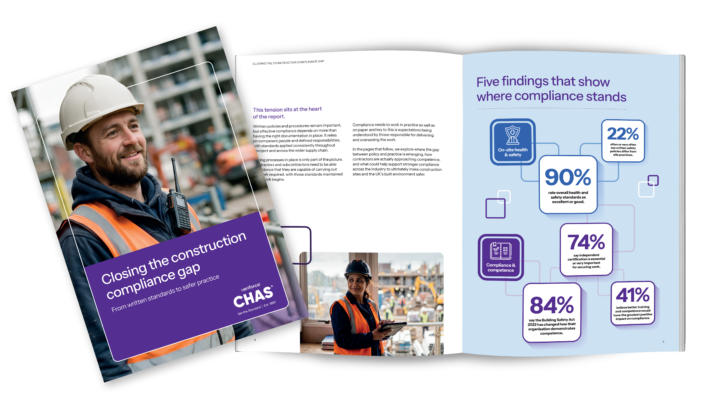
New CHAS research explores whether construction health and safety standards are translating into consistent practice on site, and where there may still be work to do.
Construction has made significant progress in health and safety. But having the right policies, procedures and documentation in place is only part of the picture. The real test is what happens once work begins.
New independent research from CHAS paints a largely positive picture. Nine in ten contractors (90%) rate overall health and safety standards in construction as excellent or good. Yet more than one in five (22%) say written safety policies often or very often differ from what actually happens on site.
That raises an important question: why can a gap still exist between written standards and everyday practice?
CHAS explores this question in its new report, Closing the construction compliance gap: From written standards to safer practice, based on independent research with 500 construction contractors.
From written standards to safer practice
Effective compliance depends on more than having policies and procedures in place.
Construction projects involve multiple organisations, individuals and responsibilities, often operating across complex supply chains. Maintaining consistent standards therefore relies on those requirements being understood, applied and monitored throughout the life of a project.
The research identifies some of the factors contractors believe can make this more difficult, from competence and communication to on-site enforcement and supervision. It also considers how the changing regulatory landscape is influencing the way organisations demonstrate competence and what this means for both contractors and the clients appointing them.
Raising the bar on competence
Competence is an increasingly important part of the construction compliance landscape, particularly as the industry responds to changing regulatory expectations.
The impact is already being felt. 84% of contractors surveyed say the Building Safety Act has changed how their organisation demonstrates competence.
But demonstrating competence is only one part of the challenge. The research explores the evidence contractors are being asked to provide before work begins, how consistently competence is being assessed and where gaps could still exist.
For contractors and hiring clients, this raises important questions about what good contractor assurance should look like and how organisations can be confident that the people carrying out work have the right skills, knowledge, experience and behaviours.
Looking beyond initial compliance
Contractor assurance can play an important role before work begins, helping organisations establish whether contractors meet the standards expected of them.
But compliance cannot end with an initial check.
Information changes, qualifications and certifications need to remain current, and additional contractors or subcontractors may become involved as projects progress. Maintaining visibility throughout the supply chain is therefore an important part of managing risk.
The report looks more closely at how contractors and subcontractors are currently assessed and the checks taking place throughout the supply chain, revealing important differences in how assurance is approached.
The role of independent assurance
Independent certification is another key theme explored in the report.
Almost three-quarters (74%) of contractors surveyed say independent certification is essential or very important for securing work.
That shows the value contractors themselves place on being able to provide recognised evidence of their standards. But certification works most effectively as part of a wider approach to contractor management and ongoing compliance.
For hiring clients, the challenge is not simply establishing whether the right standards are in place at the start, but ensuring they continue to be reflected in practice throughout the project.
What happens next?
The findings show an industry that has made significant progress but also highlight opportunities to strengthen the connection between written standards and what happens on site.
What could make the biggest difference? And where should contractors and hiring clients focus their attention as expectations around competence, compliance and supply chain assurance continue to evolve?
The full CHAS report examines these questions in detail, including:
- the barriers affecting safety compliance on site
- how competence is being demonstrated and assessed
- how organisations are checking contractors and subcontractors
- attitudes towards independent certification
- what contractors believe could improve compliance over the next five years

Download the full report
Download Closing the construction compliance gap: From written standards to safer practice to discover the full findings and what they could mean for contractors, hiring clients and the wider construction supply chain.