


When it comes to managing hazardous substances in the workplace, two crucial documents come into play: the Control of Substances Hazardous to Health (COSHH) assessment and the Safety Data Sheet (SDS).
COSHH assessments and SDSs aren’t just paperwork, they’re vital tools that help you identify, evaluate, and control the risks associated with chemicals used in your operations. Understanding the difference between these documents, how they complement each other, and how to use them effectively is essential for legal compliance and, most importantly, safeguarding your team’s well-being.
This guide will explore the world of COSHH assessments and SDSs. We’ll look into the specifics of what each document covers, how they work together to ensure a safe working environment, and practical tips for implementing them in your business.
Whether you’re new to COSHH and SDS or looking to refresh your understanding, this guide will serve as a valuable resource for maintaining a healthy and safe workplace.
What Does A Safety Data Sheet (SDS) Cover?
A Safety Data Sheet (SDS), sometimes referred to as a Material Safety Data Sheet (MSDS) in older formats, is a comprehensive document that provides essential information about a hazardous chemical. It acts as a safety reference for anyone who handles, stores, or transports the chemical.
SDS Content: The 16 Sections
Every SDS is organised into 16 sections, each covering specific aspects of the chemical:
- Identification: Product identifier, manufacturer/supplier details, recommended uses, and restrictions.
- Hazard(s) Identification: Classification of the chemical’s hazards (e.g., flammable, corrosive, toxic), including pictograms, signal words, and hazard statements.
- Composition/Information On Ingredients: Chemical ingredients and their concentrations (including impurities and stabilising additives).
- First-Aid Measures: Initial care for exposure through different routes (inhalation, skin contact, ingestion, eye contact).
- Fire-Fighting Measures: Suitable extinguishing media, specific hazards arising from the chemical, and protective equipment for firefighters.
- Accidental Release Measures: Procedures for spills or leaks, including containment, cleanup, and personal precautions.
- Handling And Storage: Safe handling practices, conditions for safe storage, and incompatibilities with other materials.
- Exposure Controls/Personal Protection: Exposure limits, engineering controls (PPE) required.
- Physical And Chemical Properties: Appearance, odour, pH, melting/boiling points, flash point, etc.
- Stability And Reactivity: Chemical stability, possibility of hazardous reactions, conditions to avoid.
- Toxicological Information: Health effects from various exposure routes, symptoms, and chronic effects.
- Ecological Information: Impact on aquatic life, bioaccumulation potential, and degradability.
- Disposal Considerations: Safe disposal methods and any precautions.
- Transport Information: UN number, proper shipping name, hazard class, packing group, etc.
- Regulatory Information: Safety, health, and environmental regulations specific to the chemical.
- Other Information: Date of preparation or last revision, additional information not covered elsewhere.
Why SDSs Matter
SDSs are your go-to source for understanding a chemical’s:
- Hazards: The types of harm it can cause (e.g., burns, poisoning, respiratory problems).
- Safe Handling: How to use, store, and transport the chemical safely to minimise risks.
- Emergency Response: What to do in case of spills, leaks, or exposure.
Remember, having access to and understanding the SDS is a legal requirement for employers. It’s a critical tool for protecting the health and safety of your workers and ensuring compliance with COSHH regulations.
Related Reading: A Guide To Health And Safety Procedures For Contractors
What Does A COSHH Assessment Cover?

A Control of Substances Hazardous to Health (COSHH) assessment is a systematic process that every employer must undertake to protect their workforce from hazardous substances used or created in the workplace. This includes chemicals, dusts, fumes, vapours, mists, gases, and biological agents.
The 5 Steps Of A COSHH Assessment
By following a structured approach outlined in the five steps below, you can ensure the safety of your team and maintain compliance with COSHH regulations.
1. Identify Hazardous Substances
Thoroughly examine your workplace to identify all hazardous substances present. This includes chemicals, dusts, fumes, vapours, mists, gases, and biological agents that could potentially harm your workforce. Consult the Safety Data Sheets (SDSs) for each substance to gain a comprehensive understanding of the hazards involved. Don’t forget to consider any byproducts or waste generated during your work processes, as these may also pose risks.
2. Evaluate The Risks
Once you’ve identified the hazardous substances, carefully evaluate the risks they pose to your workers. Determine if your workforce might be exposed to each substance, whether through inhalation, skin contact, or ingestion. Assess the likelihood and severity of harm that could result from each exposure route, taking into account the duration and frequency of exposure. This evaluation will help you prioritise the most significant risks and inform the development of effective control measures.
3. Decide On Control Measures
With a clear understanding of the risks, you can now decide on appropriate control measures to either eliminate or reduce exposure to a safe level. Prioritise measures based on the hierarchy of control, which emphasises eliminating the hazard entirely or substituting it with a safer alternative whenever possible.
If elimination or substitution isn’t feasible, consider engineering controls like ventilation systems or enclosed processes. Administrative controls such as rotating workers or limiting exposure time can also be effective. As a last resort, provide appropriate personal protective equipment (PPE) to minimise exposure.
4. Record Your Findings
Document your COSHH assessment in a written format, often referred to as a COSHH safety sheet. This document should include detailed information on the identified substances, the hazards they pose, the implemented control measures, and procedures for monitoring and reviewing the effectiveness of these measures. The written assessment serves as a valuable reference for ongoing safety management and demonstrates your compliance with COSHH regulations.
5. Review And Update
The COSHH assessment isn’t a static document, so it requires regular review and updates to ensure its ongoing effectiveness. Whenever there are changes to work processes, the substances used, or the control measures in place, revisit and revise your COSHH assessments accordingly. By maintaining up-to-date assessments, you can proactively manage the risks associated with hazardous substances and continually improve the safety of your workplace.
Free COSHH Risk Assessment Template
Do you or your team handle hazardous chemicals at work?
A COSHH Risk Assessment helps to create a safe working environment. Enter your details for a free template in your inbox.
By submitting this form you confirm you are happy to be contacted by CHAS in accordance with our Privacy Policy
Why COSHH Assessments Matter
COSHH assessments are both a legal requirement and a critical tool for protecting your workforce. They help you:
- Identify and understand the hazards associated with substances in your workplace.
- Assess the risks to your team’s health.
- Implement effective control measures to minimise those risks.
- Demonstrate legal compliance and commitment to a safe working environment.
Remember, a well-conducted COSHH assessment is an investment in the health and safety of your workers and the overall success of your business.
Related Reading: Why Are Risk Assessments Important?
Key Differences Between COSHH and SDS
While both COSHH assessments and Safety Data Sheets (SDSs) are essential for managing workplace chemicals, understanding their distinct roles is crucial. Here’s a breakdown of their key differences:
| Feature | Safety Data Sheet (SDS) | COSHH Assessment |
| Focus | Information on the chemical itself (hazards, properties, safe handling, etc.) | Assessment of the risks associated with using the chemical in a specific workplace and the control measures needed. |
| Source | Provided by the manufacturer/supplier | Created by the employer (or a competent person) |
| Legal Requirement | Mandatory for manufacturers/suppliers to provide to anyone purchasing or handling their chemicals | Mandatory for employers to conduct for any hazardous substances used in their workplace |
| Content | Standardised 16-section format covering comprehensive chemical information | Tailored to the specific workplace, detailing identified hazards, risk evaluation, and implemented control measures |
SDS vs. COSHH: A Symbiotic Relationship
While distinct, SDS and COSHH are interconnected. Think of the SDS as a reference manual that provides vital information about a chemical, while the COSHH assessment acts as a practical guide on how to use that information to ensure safe handling within your specific work environment.
- SDS Informs COSHH: The hazards, properties, and safety precautions detailed in the SDS are crucial inputs for conducting a thorough COSHH assessment.
- COSHH Goes Beyond SDS: While the SDS offers general guidance, the COSHH assessment considers your unique workplace context to identify specific risks and tailor control measures accordingly.
Understanding these differences is key to ensuring that both SDSs and COSHH assessments are used effectively to protect your workers and maintain a safe and compliant workplace.
Related Reading: What Are Safe Systems of Work (SSoW)?
How COSHH And SDS Work Together
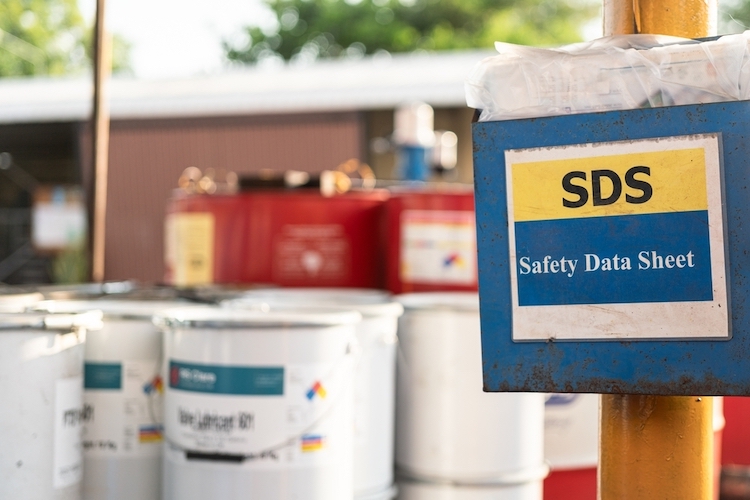
COSHH assessments and Safety Data Sheets (SDSs) are intrinsically linked in terms of workplace chemical safety. Understanding how these documents work together is key to effective risk management.
The Information Flow: From SDS To COSHH
The SDS acts as a foundational source of information for conducting a COSHH assessment. The 16 sections of the SDS provide crucial details about a chemical’s:
- Hazards: The potential harm it can cause (e.g., flammability, toxicity, corrosivity). This information is essential for identifying and evaluating risks in the COSHH assessment.
- Safe Handling And Storage: Procedures for using, storing, and transporting the chemical safely. These guidelines inform the development of control measures in the COSHH assessment.
- Exposure Controls And Personal Protection: Recommendations for exposure limits and protective equipment (PPE). These are considered when determining appropriate controls in the COSHH assessment.
By drawing on the comprehensive information in the SDS, the COSHH assessment can accurately assess the risks posed by the chemical in your specific workplace context.
From Assessment To Action: COSHH’s Practical Application
The COSHH assessment takes the information from the SDS and applies it to your unique workplace. It considers factors like:
- How The Chemical Is Used: The tasks, processes, and quantities involved.
- Who Is Exposed: The number of workers, their proximity to the chemical, and duration of exposure.
- Existing Control Measures: Ventilation, engineering controls, work practices already in place.
Based on this assessment, the COSHH process outlines specific control measures tailored to your workplace, such as:
- Substitution: Replacing hazardous chemicals with safer alternatives.
- Engineering Controls: Implementing ventilation systems or enclosed processes.
- Administrative Controls: Rotating workers, limiting exposure time, providing training.
- Personal Protective Equipment (PPE): Specifying appropriate gloves, masks, respirators, etc.
The COSHH assessment, informed by the SDS, bridges the gap between theoretical knowledge about a chemical and practical actions to protect your workforce.
Together, COSHH and SDS form a powerful duo in chemical safety management, ensuring that you not only understand the hazards but also implement the necessary safeguards to keep your team safe.
Practical Tips For Using COSHH And SDS
To ensure effective chemical safety management in your workplace, consider these practical tips for using COSHH assessments and Safety Data Sheets (SDSs):
Accessing And Understanding SDSs
- Where to find them:
- Request SDSs from your suppliers when purchasing any hazardous substances.
- Many suppliers provide SDSs on their websites or through online databases.
- How to read them:
- Familiarise yourself with the 16-section format and key information in each section.
- Focus on hazard identification, safe handling, storage, and emergency procedures.
Conducting And Maintaining COSHH Assessments
- Start with the SDS:
- Use the information in the SDS to identify hazards and assess risks.
- Consider how the chemical is used in your specific workplace.
- Record and review:
- Create a written COSHH assessment (also known as a COSHH safety sheet) detailing your findings and control measures.
- Regularly review and update your assessments as needed.
Training And Communication
- Educate your workforce:
- Provide training on how to read and understand SDSs.
- Ensure workers know where to find SDSs and how to access them.
- Communicate the findings of COSHH assessments and explain the implemented control measures.
- Promote awareness:
- Display safety posters and reminders about chemical hazards and safety precautions.
- Encourage open communication about any concerns or incidents related to chemical safety.
Seek Expert Help
- Complex substances:
- If you work with highly hazardous or complex chemicals, consult a safety professional for assistance with COSHH assessments and control measures.
- High-risk processes:
- For processes with significant potential for exposure, seek expert advice to ensure optimal safety measures.
By following these practical tips, you can harness the power of COSHH assessments and SDSs to create a safer and healthier environment for your workforce. Remember, proactive chemical safety management is not only a legal obligation but also a sound business practice that protects your team and your bottom line.
Safeguard Your Workforce, Secure Your Success: The Power Of COSHH And SDS
COSHH assessments and SDSs are more than just documents, they are the cornerstones of a robust chemical safety management system. By understanding and effectively using these tools, you not only fulfil your legal obligations but also create a safety-conscious culture that protects your most valuable asset – your workforce.
Imagine a workplace where chemical hazards are identified, assessed, and controlled meticulously, where your team is well-informed and equipped to handle substances safely. This is the vision that Veriforce CHAS helps you realise through comprehensive guidance, resources, and compliance packages.
With CHAS membership, you showcase your unwavering commitment to health and safety, a decisive factor in winning contracts. By demonstrating your compliance with COSHH regulations and meticulous use of SDSs, you not only mitigate risks but also enhance your reputation as a responsible and trustworthy contractor.
Don’t miss out on the opportunities that await you in the public sector market. Take the first step today – explore CHAS membership packages and unlock your full potential. Book a callback with a CHAS expert to discuss how we can tailor our services to your specific needs and propel your business towards greater success.
Get in touch with CHAS now and begin a journey towards a safer, healthier, and more prosperous future.

