


In this CHAS guide, we explain what a Method Statement looks like and what information to include within one.
When working in a high-risk environment, it’s important to set out guidelines, instructions, and potential hazards to keep employees safe. A method statement can help with all of these things. Health and safety is critical when working in the construction industry, where there’s a much higher injury rate than in other sectors. A study created by hse.gov.uk revealed that “the fatal injury rate (1.62 per 100,000 workers) is around four times the all industry rate.”
A method statement allows managers to communicate clearly with the team and the client, ensuring that everyone is on the same page and aware of the risks involved before a project begins.
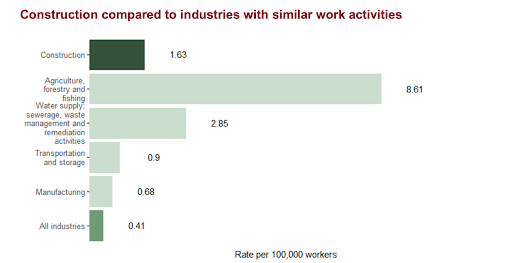
Source: RIDDOR, 2016/17-2020/21
What Is A Method Statement?
A method statement describes how to do a task safely and outlines the work process to be completed.
A method statement is often used alongside a risk assessment but never as a replacement. When used together, you may hear them referred to as RAMS.
The main aim of your method statement is to establish potential hazards, so it’s common to include diagrams or pictures of hazard locations and welfare facilities where helpful.
Whilst a method statement contains plenty of information, it doesn’t need to be lengthy. In some instances, it can be just a page long.
When Should A Method Statement Be Used?
While a method statement is not a legal requirement, one should be used where any high-risk work occurs. This is especially applicable to the construction sector.
You may create a method statement either after or alongside a risk assessment. You should produce a new one for every new project or each time the team or project location changes. This is because a new situation may come with a new set of safety precautions that should be implemented, depending on who and what is involved. It’s never a good idea to assume the risks will be the same because projects are similar, as the people working on the task, the location and the task itself will create too many variables.
What Do You Need To Write A Method Statement?
Begin with a deep-dive look at the situation, task or process by completing a risk assessment. For assistance in conducting risk assessments, become a CHAS contractor or read our blog on how to carry out a risk assessment the right way.
You should have first identified the hazards that could potentially cause harm or poor health at each part of the task or project.
Analyse each hazard and then question what measures have been taken to mitigate them entirely or reduce the threat to an acceptable level. If the measures taken fall short, you should consider any additional practices you can put in place to ensure safety for all involved.
You should also consider the people working on the project. Assess how they can work most safely and ensure necessary precautions are in place. Once you feel confident that your risk assessment is complete, you’re ready to carry out your method statement.
Writing A Method Statement

There are three sections to include when writing a method statement from scratch. These include a brief overview of the project, hazards and safety measures, and, if appropriate, a final section of step-by-step instructions. Next, we’ll inspect each section and describe what to include in your method statement.
Section 1 — Project Overview
Begin your document with a brief section with the project or task information outlined at a glance. Here you should include:
- Project name or task name
- The reference number of your document
- Your name plus anyone else involved in creating the method statement
- The name of the contractor
- The industry or discipline you’re dealing in. For example, construction
- The site address and site access
- Work permits required
- Project start and end dates
- A brief one-line description of the project or next action needed
- Whether or not the method statement has been accepted
- An issue date.
Section 2 — Hazards And Safety Measures
This part of a method statement may take the form of a checklist and include the below measures plus any more as you see fit. You should adjust these to meet the task at hand. After each of these points, consider a checkbox and an additional space for details on each area.
More generally, things to consider are whether you have work permits, personal protective equipment and safety documents in place. Keep in mind any risks involved in each area and the team working on every project stage.
Process And Specialisation Area — This should be a broad overview of what the project involves and how the area of specialisation is relevant to your method statement and risk assessment.
The Sequence Of Work — Detail steps each employee will take to complete the process. If this is lengthy, you could include this section later in a separate document and include diagrams or images.
Supervisory Arrangements And Monitoring Arrangements — Examine how each one contributes to doing the job safely. Include safety contacts and describe whether they are integral to your emergency procedures.
Schedule Of Plant — Identify any dangerous equipment and detail a safety plan with control measures outlined. For example, when does something need to get updated or upgraded to ensure a safe system?
Reference To Occupational Health Standards — Consider your standard operating procedure in relation to health and safety concerns. This may be exposure to chemicals or emissions, loud noise, stress or fatigue.
First Aid Procedures — An integral part of all method statements, first aid procedures should detail the health and safety contacts on-site and ensure the health and safety of the entire team.
Personal Protective Equipment Required — List each team member, even those who are self-employed and ensure your method statement includes the PPE required for every person.
Arrangements For Demarcation — It’s essential to define the boundary limits for your project so that your method statement can contain control measures for everything within that area.
Third-Party Safety Controls — Consider any neighbouring properties and write details of health and safety precautions that ensure their welfare.
Emergency Procedures — A critical part of all method statements describes any control measures in place should there be an emergency.
Section 3 — Step-by-Step Instructions
For most method statements, the above information is plenty, and when conducted alongside risk assessments, there is no need for further detail.
However, a specific part of the work may require more thorough detail, so you may choose to write out step-by-step guidance about what’s involved and highlight any health and safety risks along the way. Details may include an image or diagram of a hazardous area or piece of kit that requires explanation.
After this is completed, you’re ready to write out your step-by-step instructions. This essentially means that you’re putting everything in a sequence that should be followed to ensure the job is completed in the safest possible order.
Method statements are an important step to ensure the health and safety of all workers in a project. Whilst method statements seem time-consuming, they may save time in the long run as they contain the relevant information needed for everyone to work safely from the offset.
Free Safety Method Evaluation Statement
Use our free safety method statement evaluation template to ensure your teams are health and safety compliant.
Enter your details and receive your free safety method evaluation statement template in your inbox.
By submitting this form you confirm you are happy to be contacted by CHAS in accordance with our Privacy Policy

