Trends for managing health and safety in construction
1. Working from home
The sudden exodus to remote work came as a shock to the construction industry — a survey found that nearly half of the 20,000 UK construction workers said they had no remote work experience before the pandemic. Organisations eventually caught up thanks in large part to the adoption of remote work technology and set-ups such as “digital twins,” where digital replicas of construction projects enable on-site and remote teams to collaborate.
All this has set the stage is for remote work to become permanent (or at least partially).
But construction companies need to remember that remote work also comes with its own health and safety responsibilities as part of their duty of care. HSE recommends employers include the following aspects of health and safety in their risk assessments for home workers:
- Stress and poor mental health
- Using equipment like computers and laptops safely
- Their working environment.
The agency also has guidance for remote workers themselves.
2. Wearables and the Internet of Things (IoT)
The Internet of Things (IoT) is an ecosystem of computing devices that enable you to create wireless networks of interconnected mechanical and digital machines, objects and people. This allows devices and construction equipment to “talk” to each other in real-time and capture data about potential workplace hazards, equipment failure and other workplace risks.
Wearables are arguably the most accessible pathway to adopting IoT in the construction industry. These include:
- Hard hats with proximity sensors and location tracking
- Wristwatches that monitor hand and arm vibrations
- Health devices that measure core body temperature and average heart rate
- Tracking devices that monitor job-site movement to detect patterns in accidents.
The HSE has already picked up on the potential of wearable devices to improve workplace health and safety. According to agency report:
“There is growing evidence that wearable devices can significantly benefit health and safety in the workplace through positioning and sensor technologies. The advancement of the Internet of Things has meant that many of these technologies are increasingly being deployed, helping to improve workplace productivity”
— Shared research project, wearables in the workplace
3. Employee well-being comes under focus
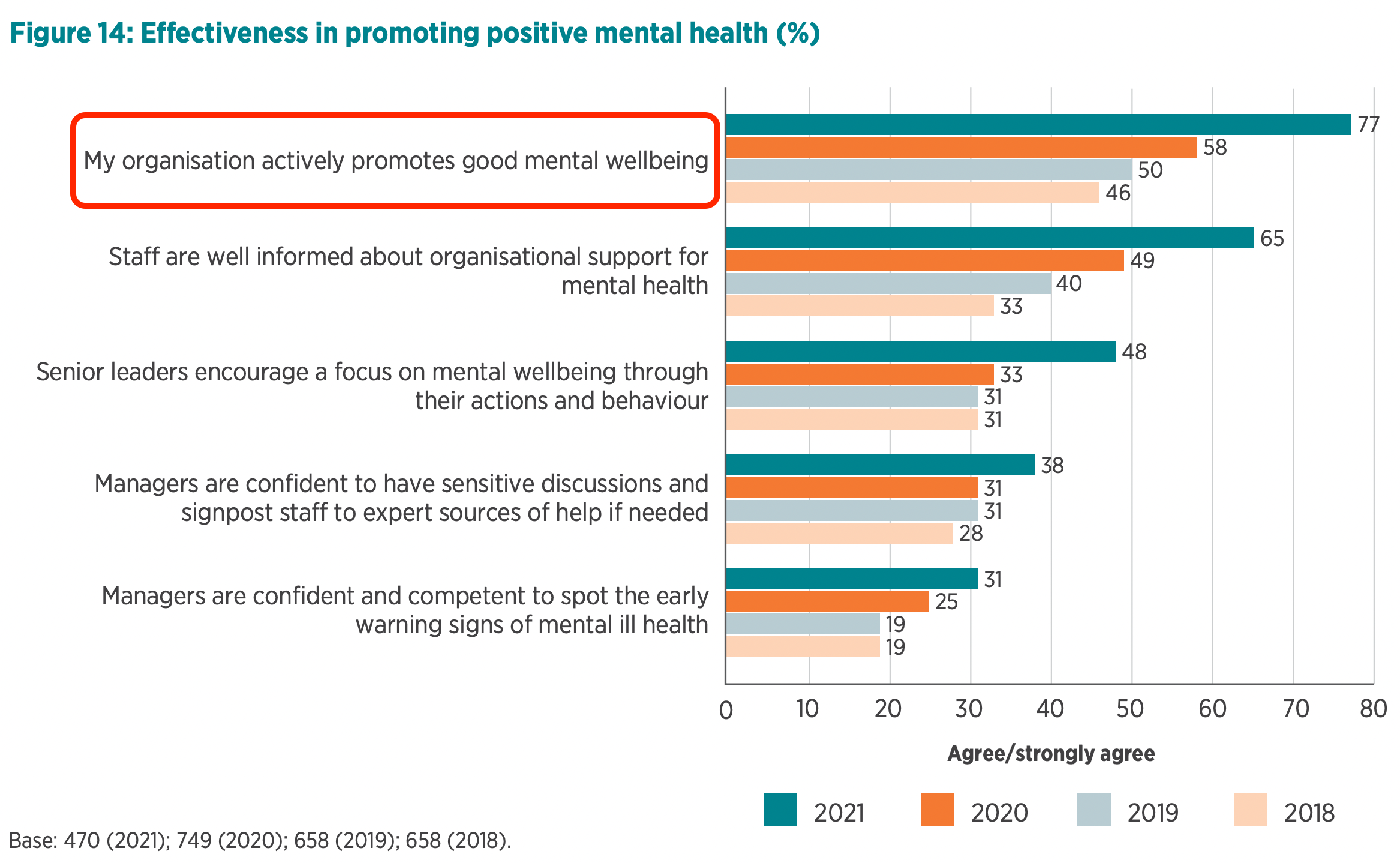
The need to include mental health in general workplace health and safety has come under focus. The pandemic made it clear that limiting social interactions increases the risk of stress, anxiety and depression.
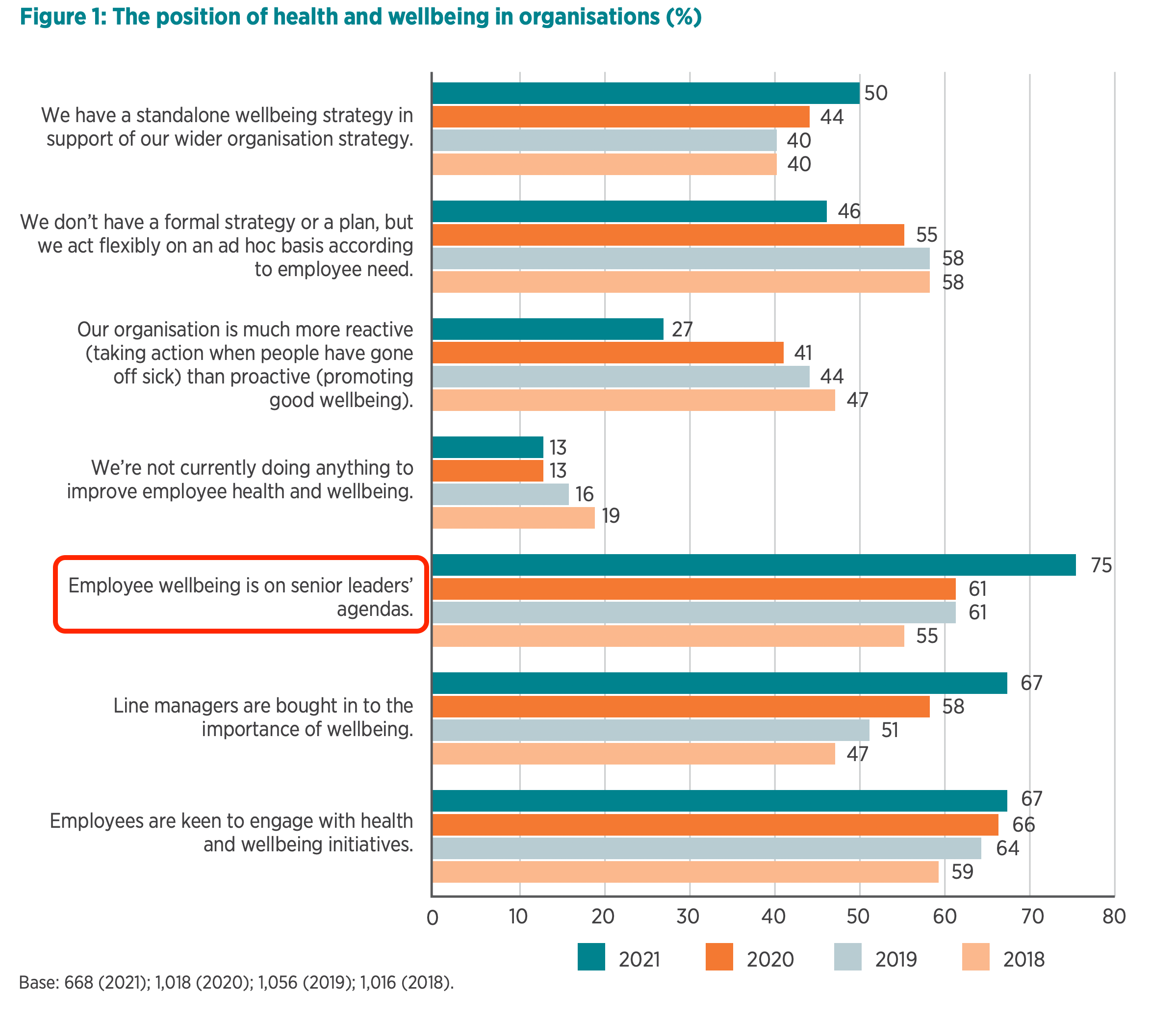
Fortunately, more employers are making an effort to view workplace health and safety as more than just physical health. According to CIPD’s Health and wellbeing at work 2021 survey report, 75% of employees agreed that employee well-being is on their senior leaders’ agendas — up from 61% last year.