


Short answer: yes. You still need to conduct risk assessments for work-from-home employees. However, there are distinct key factors to consider when assessing the risks associated with working remotely.
The past few years have witnessed a monumental shift in the way businesses operate. Triggered by an unforeseen global pandemic and spurred on by rapid technological advancements, working from home, once an occasional perk, has transformed into a mainstay for many companies.
ONS data reveals that 44% of UK workers have adopted remote work practices. This figure comprises 16% who work remotely full-time and 28% who follow a hybrid model, dividing their work hours between home and the office.
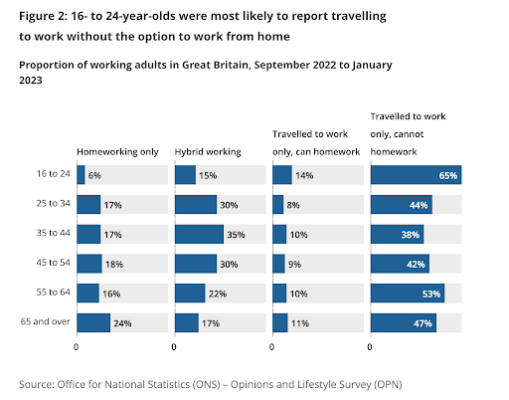
This paradigm shift, while offering numerous advantages like flexibility and a broader talent pool, also ushers in a slew of challenges and considerations that businesses previously didn’t have to grapple with in a traditional office setting.
Among these considerations is the concept of risk assessment.
In a conventional office, risk assessment entails evaluating factors like building security, fire safety protocols and workplace ergonomics. But when the “office” extends to hundreds or thousands of individual homes, each with its unique environment, the dynamics change dramatically.
As remote work becomes more prevalent, businesses must grapple with the question: Do they need a specialised risk assessment for their work-from-home employees? This article aims to delve into this pertinent issue, shedding light on the unique risks of remote work and the importance of addressing them proactively.
Related Reading: What Is The Purpose Of Risk Assessments?
Why Is A Risk Assessment For Work-From-Home Employees Necessary?
A risk assessment, at its core, is a systematic process of evaluating potential threats or hazards that could harm an organisation or its stakeholders. In the traditional workplace, this has often revolved around physical safety, requiring measures such as:
- Identifying tripping hazards
- Ensuring fire safety compliance
- Checking for the presence of hazardous materials
- Assessing the structural integrity of office buildings.
But as the nature of work evolves, so too must our understanding and approach to risk assessments. The transition to remote work introduces multiple new challenges for creating a positive safety culture. Homes, which were primarily designed for comfort and relaxation, are suddenly being transformed into workstations, blurring the lines between work and personal life. This shift means that many of the controls and safeguards inherent in a traditional office space are now absent or severely diluted.
Related Reading: What Is Safety Culture?
Consequently, the remote work era demands a fresh perspective on risk assessments. It’s not just about ensuring an employee’s home desk is ergonomically sound or that their Wi-Fi is secure. It’s a more holistic approach that takes into consideration the myriad of nuances that come with working outside a designated office environment. This revamped approach aims to ensure that as the boundaries of the workplace expand, the standards of safety, security, and wellbeing remain uncompromised.
What Does The HSE Say About Work-From-Home Risk Assessments?
The Health and Safety Executive’s (HSE) guidance on managing the health and safety of remote workers is clear: Employers still have a legal duty to uphold health and safety standards for employees who work from home (or some other approved space outside of the traditional worksite).
The HSE offers guidance for employers with workers who:
- Work from home on a long-term basis.
- Routinely oscillate between office and home settings — often referred to as hybrid working.
Typically, the threats posed to the health and safety of work-from-home teams are minimal, and the preventive measures required are simple and direct. The key factors to include in your risk assessment for remote employees should encompass:
- Addressing mental health and stress concerns.
- Safe utilisation of devices like computers and laptops.
- Evaluating their workspace environment.
It’s important to engage in discussions with your remote employees to understand the specific risks that may apply to them. For starters, talk about their work-from-home setups; do they have the equipment to work from home and stay productive? Does their home have enough space for a workstation? Do they need additional support for their mental health and wellbeing?
Free Risk Assessment Template
Take the stress and confusion out of creating a risk assessment with our free template.
Enter your details, and we’ll email you a risk assessment template that’s both compliant and comprehensive to use.
By submitting this form you confirm you are happy to be contacted by CHAS in accordance with our Privacy Policy
Common Risks To Include In Your Work-From-Home Risk Assessment
The risks that could affect your remote teams’ health and safety span technological, physical and psychological factors. Whatever the case, the management of these risks and their management is critical to a safe transition to a more flexible working environment.
Technological Risks
- Unsecured Wi-Fi connections and potential data breaches: As employees shift from the secure networks of their office spaces to home Wi-Fi, the risk of unauthorised access to company data has also increased. According to a Malwarebytes Labs report, 20% of organisations have experienced a security breach due to a remote worker. This is largely due to how many regular home networks lack the robust security measures of traditional workplaces, potentially leaving your remote workers vulnerable to cyberattacks and breaches. Such vulnerabilities can expose sensitive company data, leading to significant financial and reputational damages.
- Use of personal devices: Not all employees have company-issued hardware, leading many to use their personal devices for work. These devices might lack the latest security patches or be riddled with malware from non-work-related internet usage. Consequently, they become weak links in the company’s security chain, heightening the risk of data leaks or cyberattacks.
- Phishing and other online scams: Remote workers have become prime targets for phishing scams, where malicious actors disguise themselves as trustworthy entities to extract sensitive information. Without the immediate ability to verify suspicious emails or messages with colleagues, remote workers may inadvertently provide critical data to these scammers.
Physical Environment Risk
- Ergonomic concerns: Office spaces are often designed keeping ergonomics in mind, ensuring that employees have chairs that support posture, desks of the right height, and adequate lighting. At home, however, many workers might use makeshift setups – dining tables, couches or even beds. Over time, these improper setups can lead to musculoskeletal problems, eye strain and other health concerns
- Safety concerns: The traditional workplace usually adheres to strict safety standards, minimising risks of trips, falls or other accidents. Homes, on the other hand, aren’t typically designed with such considerations. Loose cables, children’s toys or even pets can become potential hazards. Additionally, there’s the concern of fire safety. Without standardised office protocols or equipment, a small accident at home can quickly escalate.
Mental And Emotional Health Risks
- Isolation: In one survey, 81% of workers under 35 feared loneliness from long-term home working, and studies have shown that younger workers are experiencing higher levels of stress and anxiety since they shifted to remote work. Without daily face-to-face interactions with colleagues, feelings of loneliness can creep in, potentially leading to depression and a sense of detachment from the organisation
- Overworking and lack of work-life balance: With no clear distinction between “home” and the “workplace,” many employees may find themselves working longer hours, leading to burnout and chronic fatigue. The absence of a physical boundary between professional and personal spaces can blur the lines, making it difficult for employees to “switch off” from work.
- Distractions at home: While offices are designed for productivity, homes come with their unique set of distractions. Whether it’s children needing attention, pets being playful or simply the lure of household chores, these distractions can impact an employee’s focus and productivity.
Bottom line? Whether your teams work remotely or on-site, your status as an employer means that you are obligated to ensure the health and safety of all your employees. In conducting risk assessments for work-from-home employees, you’re not just ensuring operational efficiency but also highlighting your commitment to the well-being and security of your people.
If you employ or manage a remote team or remote workers, demonstrate your compliance with health and safety legislation by becoming an accredited CHAS member today. Get started with CHAS Standard to raise your compliance standards and get access to our growing network of 2,500+ CHAS Clients across the UK.
CHAS Membership Benefits for Contractors
Gain pre-qualification for projects with 2,500+ of CHAS clients
Comply with mandated risk mitigation requirements to reassure prospective clients and secure exclusive CHAS membership benefits that could save your company hundreds of pounds a year, including tailored business insurance, fuel discounts, e-learning training and Business Shield support.

