


Do you play the National Lottery? Millions do and, every week, they buy a ticket in the hope of winning the jackpot. Yet the odds of doing that are a vanishingly small 1 in 45 million! And still millions of people think it might be them.
In Great Britain, there are roughly 20 million vehicles driven on business. made up of just under one million company cars, nearly four and a half million vans, over 400,000 HGVs and a staggering 14 million private cars thought to be used for work journeys – some every day, some only occasionally.
Every year, according to government statistics, around 40,000 people are injured in collisions that involve someone who was driving for work. Plus, these are only the injuries that are reported – many aren’t. And there are many more that only involve damage to vehicles or property. This means the odds of being involved in an injury collision while driving for work are just 1 in 500 and yet very few people ever believe it will happen to them.
That means if you have a fleet of 500 vehicles you can expect your drivers to be involved in at least one injury collision every year on average. If your drivers and vehicles aren’t managed well, then the odds could be even higher.
On top of this, the Parliamentary Advisory Council for Transport Safety (PACTS) conducted a review of the government crash statistics to find out which mode of transport posed the biggest risk to other road users and found vans and light goods vehicles were involved in more than twice as many fatalities as motorcycles or HGVs and eight times as many as those involving cars.
Anyone who manages vans and their drivers has a legal duty of care under the Health and Safety at Work Act to take all ‘reasonably practicable’ steps to minimise the risk to staff, and anyone else who may be affected by the company’s operations.
In short this legislation means that;
- The company mustn’t do anything that puts drivers at risk.
- The company’s work-related driving activities mustn’t endanger any other road users.
- Directors must put appropriate policies and procedures in place to ensure that this is so.
- And all employees including drivers, managers and directors must follow those policies and procedures at all times.
The key to success is understanding how these legal responsibilities are shared across the business at all levels;
- Directors and managers have a responsibility to ensure that risks are identified and managed, and that the correct policies and procedures are put in place.
- Your drivers have a responsibility to follow those procedures and behave responsibly at all times, driving safely and following the Highway Code.
- Line managers, work schedulers and others may also have an important role to play in managing the risk, by ensuring that drivers aren’t subject to unreasonable demands that might encourage them to speed or increase the risk of fatigue.
How do we get there? By going round in circles!
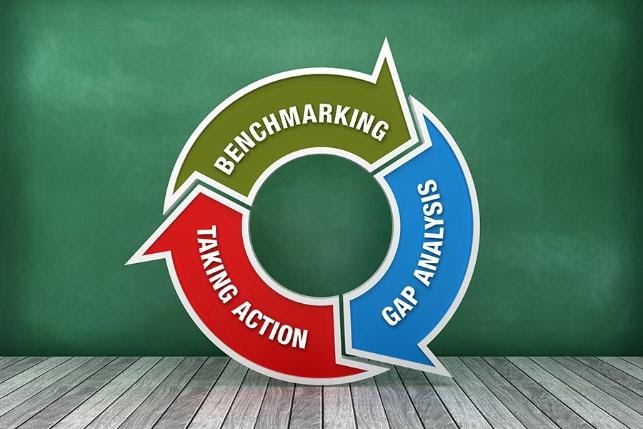 It’s not always obvious where to start with managing driver risk. After all, there are so many different areas that need to be tackled. And how do we know whether what we’re doing is good or bad, or whether we have any glaring gaps. It’s easy to feel like we’re just going round in circles.
Driving for Better Business has created a range of free online tools that can help you;
- Benchmarking sits as the primary entry point to this process. By allowing organisations to see how they fare when key metrics are set against the performance of their peers, it becomes clear how they stack up against both a user average benchmark and also a good practice benchmark
- Gap Analysis – Step two involves a deep dive into your current policies and processes to highlight the areas that could deliver the required improvements to raise the organisation’s benchmarking scores.
- Action – how do we implement those new processes effectively? The resources on the Driving for Better Business include tools, guides, advice and examples of good practice.
So, while you’ll still be going round in circles at least they’ll be productive circles, and you’ll be doing it with the expectation that you and your fleet will be performing a little bit better each time around.
Is this really how we do things round here?
 Culture is a hugely important part of this process and vital to improving driver safety. Culture can be defined as ‘the way we do things round here’. When new people start working for an organisation, they’ll look around them at how things are done and copy the prevailing behaviours. If they see corners being cut, they’ll cut corners themselves and, if they see everyone taking care to do things right, then they copy them to fit in.
This is why it’s so important to manage your drivers well, ensuring they are clear about the standards expected of them. It means you need to focus on three things: a good driving for work policy, that is clearly communicated to all staff, and consistently applied and monitored.
These are the key building blocks of a strong and resilient safety culture. Remember – your existing drivers play a vital role in the successful integration of safe new drivers.
Just the cost of doing business?
Running vans can be an expensive business. While poor driving can obviously put your drivers and other road users at risk, it can also cost your organisation huge amounts of money, but often in ways you may not realise.
 The most obvious costs are fleet insurance premiums and repairs arising from unnecessary vehicle damage, whether that be serious collisions or just avoidable parking scrapes. However, there are many hidden costs that are also involved such as the increase in admin and management time sorting out claims and repairs, right up to staff absence and vehicle off road time if the incident was more serious.
Operational costs such as fuel, tyres, routine service and maintenance, insurance and damage repairs are often simply seen as the cost of doing business yet they can be significantly higher than they need to be when drivers and vehicles aren’t being managed properly.
You can only control costs if you are measuring and monitoring the right data and linking it to driver behavior.
If you aren’t measuring and you aren’t monitoring then you aren’t managing – it’s as simple as that!
Stand up and be counted
It is vitally important that the leaders in charge of the business clearly commit to supporting those responsible for managing driver risk and that they can put into words why driver safety is so important to them personally and to the business as a whole.
Of course, leaders to make sure their commitment is genuine or it all falls down very quickly. A leader that states how important driver safety is, and then fails to take an interest or provide support when needed or, worse, actively goes against the policy such as failing to abide by a mobile phone policy or failing to pull up employees who don’t meet the standards, will quickly lose the support of the workforce and the culture will fail.
Don’t allow your driver risk management to become a lottery. Knowledge and careful planning are needed to ensure that you, your drivers, other road users and your business are fully protected, and the free Driving for Better Business programme can help.
If you’d like to learn more about what you and your organisation should be doing and whether you have any gaps in your driver risk management, join our free programme at www.drivingforbetterbusiness.com. We have a wealth of free online tools and resources to help you understand where your priorities should be to reduce risk, control costs and improve efficiency.
By Simon Turner, Campaign Manager for the Driving for Better Business programme

Free Risk Assessment Template
Take the stress and confusion out of creating a risk assessment with our free template.
Enter your details, and we’ll email you a risk assessment template that’s both compliant and comprehensive to use.
By submitting this form you confirm you are happy to be contacted by CHAS in accordance with our Privacy Policy

