


Updated July 2025
While companies are not legally required to have a drug and alcohol policy, employment protection law, which requires employers to treat substance dependence as a form of sickness, makes it clear that drug and alcohol use should be part of your overall health and safety protocols in the workplace.
It’s no secret that using drugs or alcohol at work can have negative repercussions for employers. In industries like construction, workers under the influence of alcohol and controlled substances can cause accidents that lead to injuries or death of other employees and members of the public.
These risks underscore the importance of drug and alcohol policies. However, this need is particularly pressing in the UK.
What Is A Drug And Alcohol Policy?
A drug and alcohol policy is a formal document that outlines your organisation’s approach to managing substance misuse in the workplace. It typically includes rules around alcohol and drug use, testing procedures, support pathways and consequences for policy violations.
Why UK Employers Need To Be More Mindful Of Drug And Alcohol Abuse
According to Alcohol Change, “24% of adults in England and Scotland regularly drink over the Chief Medical Officer’s low-risk guidelines.” Research from Public Health England (PHE) paints an even grimmer picture: 1.6 million adults in England may have some level of alcohol dependence.
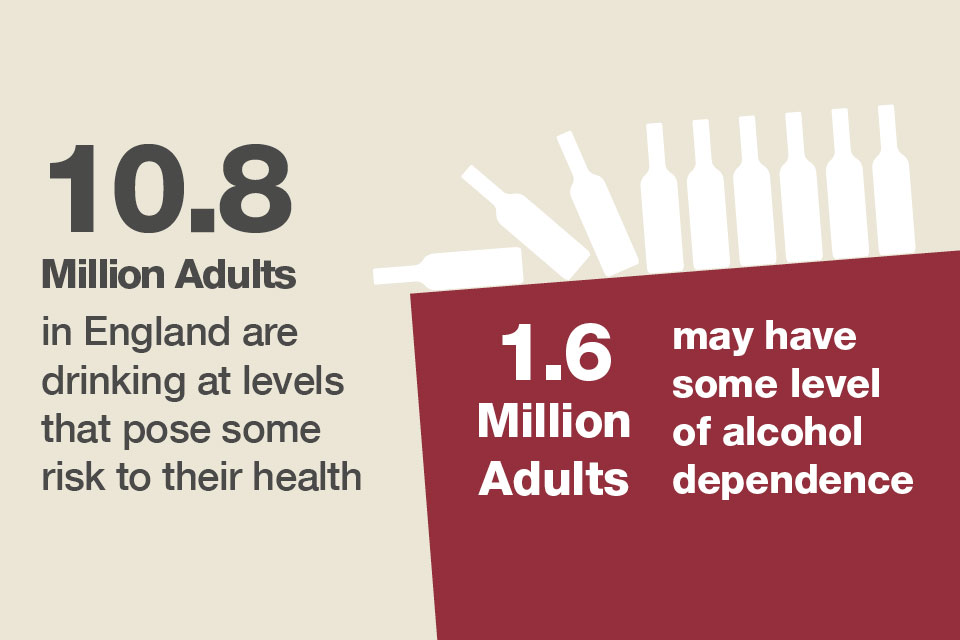
Source: Public Health England
Meanwhile, the Chartered Institute of Personnel and Development (CIPD) warns that the UK is the “worst offending country for prescription drug abuse” in Europe due to the prevalence of illegal online pharmacies selling drugs like diazepam (Valium) — a Class C drug in the UK.
If you are a contractor or construction organisation planning to create a drug and alcohol policy for your workplace or need information about its business benefits, we’ve put together a list of five reasons to have one.
1. A Drug And Alcohol Policy Is Part Of Your Health And Safety Responsibilities
Employers aren’t legally required to have or implement their drug and alcohol policies, nor are they obligated by law to pay for treating workers with substance abuse problems.
However, having a policy goes a long way towards meeting your health and safety responsibilities under the law.
For instance, the Health and Safety at Work etc. Act 1974 states, “It is the duty of every employer to ensure, so far as is reasonably practicable, the health, safety and welfare at work of all his employees.”
Related Reading: Who Is Responsible for Workplace Health and Safety?
If you knowingly allowed an employee to come to work under the influence of drugs or alcohol and they placed their co-workers at risk of harm, you could be liable. A drug and alcohol policy helps prevent this by outlining clear actions and responses for these incidents.
2. Most Employers Have A Drug And Alcohol Policy
The good news is that most employers in the UK treat a drug and alcohol policy as an integral component of their overall health and safety policy.
According to the CIPD report, Managing drug and alcohol misuse at work, around 77% of organisations in 2020 had a specific policy on drugs and/or alcohol, while 51% said they have disciplinary procedures for drug and/or alcohol-related incidents.
Veriforce CHAS Tip: CIPD also found that only a third of organisations provide employees with information and resources for managing their drug and/or alcohol problems. This presents an opportunity for your company to go beyond punitive measures and treat substance abuse or dependence as a form of sickness. This assures employees that they can approach you for support and care.
Free Hazardous Substances Guide
If your team handles hazardous substances in the workplace, it’s important to understand the risks involved with each one.
Enter your details to receive a free guide detailing the main hazardous substances and how to handle them safely.
By submitting this form you confirm you are happy to be contacted by CHAS in accordance with our Privacy Policy
3. Workers In Construction Face A Greater Risk Of Drug And Alcohol Abuse
Workers in the construction industry face a high risk of injury due to the repetitive and strenuous nature of work. This, in turn, places them at greater risk of using alcohol and self-medicating with prescription drugs for pain management — creating a deadly cycle of injury and substance abuse.
Citing NHS data, the Considerate Constructors Scheme reports that 20% to 30% of workplace accidents in safety-critical industries such as construction can be traced back to alcohol consumption. They also found that 59% of workers agreed that there is an issue related to drugs and alcohol in the construction industry.
A drug and alcohol policy enables you to address these risks and proactively prevent workers with substance abuse issues from endangering their co-workers and the general public.
Related Reading: Managing Health & Safety In Construction Trends
4. A Drug And Alcohol Policy Can Help Address Performance Issues Caused By Substance Abuse
Aside from the risk of endangering your employees and people in your community, drug and alcohol issues can also negatively affect employee performance. According to the Institute of Alcohol Studies (IAS), 42% of workers have, at one point, reported to work under the influence of alcohol — of that number, 39% said their performance was less effective than normal.
But the real kicker is this: reduced productivity/absenteeism due to alcohol misuse in England sets taxpayers and employers back by around £21 billion per year.
A drug and alcohol policy in itself doesn’t solve this problem. But it does help employees identify the signs of substance abuse and encourage your staff to come forward and seek help before their alcohol and/or drug problem escalates.
Veriforce CHAS Tip: It’s essential to communicate your drug and alcohol policy to match your workforce’s preferred internal communication and training methods. For instance, the CIPD found that 64% of organisations communicate their drug and alcohol policies/procedures through a staff handbook. This is followed closely by 62% of organisations that communicate their policy during the onboarding process.
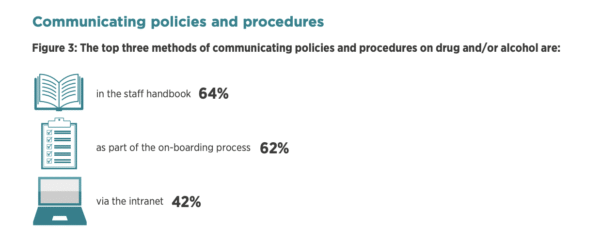
Source: CIPD
No method is 100% perfect, so we recommend using a mix of communication channels and methods to disseminate information about your drug and alcohol policy to employees across all your teams, departments and levels.
Related Reading: Guide To Workplace Health And Safety Training In Construction
5. A Drug And Alcohol Policy Is A Requirement Of The Common Assessment Standard
The Common Assessment Standard is the UK construction industry’s pre-eminent prequalification system, developed by Build UK, CECA and accreditation bodies such as Veriforce CHAS.

Apart from covering 13 critical areas of supply chain risk management, the Common Assessment Standard also builds on the health and safety requirements outlined by the SSIP and PAS 91 schemes — industry-recognised accreditation systems.
For example, the health and safety module of the Common Assessment Standard requires contractors to present a drug and alcohol policy that includes the following information as a minimum:
- The preventative measures your company takes to ensure employees do not attend site under the influence of alcohol and/or drugs.
- Items such as testing requirement, frequency, substances tested for and management of test results
- Whether the policy addresses post-incident and/or reasonable cause drug and alcohol testing
- Whether the policy addresses a return-to-duty testing process and unannounced testing programmes for employees following a policy violation and/or substance abuse treatment.
Small micro-businesses can provide a drug and alcohol statement instead of a policy.
Drug And Alcohol Policy FAQs
Is a drug and alcohol policy a legal requirement in the UK?
No, a drug and alcohol policy is not a legal requirement in itself. However, UK employers have a legal duty under the Health and Safety at Work etc. Act 1974 to protect the health, safety and welfare of their employees. Having a clear drug and alcohol policy helps fulfil that duty, particularly in high-risk sectors like construction and manufacturing.
What should be included in a workplace drug and alcohol policy?
A comprehensive drug and alcohol policy should include:
- A clear statement of the organisation’s position on drug and alcohol use
- Rules regarding use during and outside of working hours
- Testing procedures (when, how and what substances)
- Support pathways for employees dealing with substance misuse
- Disciplinary actions for policy violations
For contractors, the policy should also align with the Common Assessment Standard requirements.
How can I implement a drug and alcohol policy in my business?
Start by assessing your workplace risks and consulting employees or health and safety reps. Create a drug and alcohol policy that reflects your business size, risk level and industry expectations. Communicate the policy clearly during onboarding, training and through staff handbooks or intranet systems. Regular reviews and updates are key to ensuring the policy remains effective and compliant.
What industries are most affected by drug and alcohol misuse?
Safety-critical industries like construction, logistics, transportation and manufacturing are particularly vulnerable to the impacts of drug and alcohol misuse. In these environments, even small lapses in judgment caused by substance use can lead to serious accidents, injuries, or fatalities — making a workplace drug and alcohol policy essential.
Can a small business have a drug and alcohol policy?
Yes. While small businesses may not have the same resources as large organisations, they can still implement a basic drug and alcohol statement or policy. This helps clarify expectations for employees, reduce liability, and demonstrate a commitment to health and safety — especially if the business seeks Veriforce CHAS certification or other compliance certifications.
Be sure to follow the Veriforce CHAS blog to learn more about the different components of health and safety in the workplace. If you are ready to demonstrate your compliance with health and safety regulations and best practices, sign up for Veriforce CHAS membership and get access to our award-winning health and safety assessments. If you’re a materials supplier, become a Verified Supplier to do the same.

