
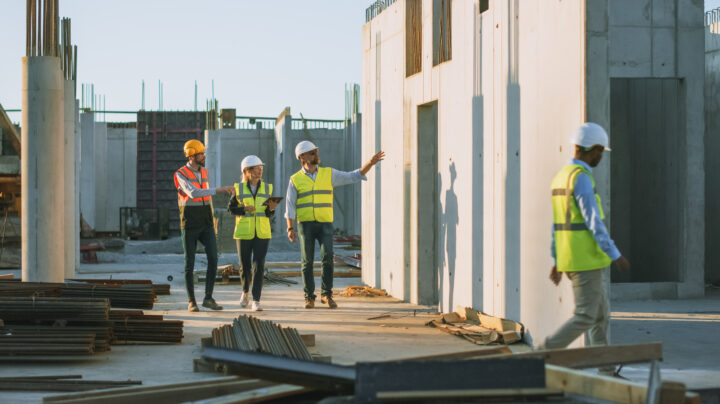
The Building Safety Act represents the most significant reform of building safety legislation in the UK in decades. Now fully in force, with the regulatory regime operational from April 2024 and continuing to evolve through 2025 and 2026, the Act places clear legal responsibilities on those involved in the design, construction, and management of buildings.
Originally introduced following the Grenfell Tower tragedy, the legislation aims to improve safety standards, accountability, and transparency across the built environment. In 2026, the focus has shifted from understanding the legislation to actively demonstrating compliance, particularly for higher-risk buildings (HRMs) and those responsible for managing them.
What is the Building Safety Act?
The Building Safety Act 2022 establishes a new regulatory framework designed to improve the safety of residential buildings, particularly high-rise developments and higher-risk buildings (HRBs). It introduces stricter oversight, clearer accountability, and ongoing compliance requirements across the entire building lifecycle, from planning and construction through to occupation and maintenance. The Act also created a new regulator and introduced a more rigorous approach to building control and safety management.
What are higher-risk buildings (HRBs)?
Higher-risk buildings (HRBs) are central to the Building Safety Act and are subject to the most stringent requirements. A building is typically classified as an HRB if it:
- Is at least 18 metres in height or has 7 or more storeys
- Contains at least 2 residential units
- Or is a hospital or care home meeting the same height threshold
All HRBs must now be registered with the Building Safety Regulator before they can be occupied. They are also subject to ongoing regulatory oversight, including certification and regular safety assessments.
This definition applies primarily in England under the Building Safety Act framework.
The Building Safety Regulator (BSR)
The Building Safety Regulator (BSR) was established to oversee the new safety regime. Since April 2024, the BSR acts as the building control authority for all higher-risk buildings in England, removing the option for developers to appoint private inspectors. The BSR is responsible for:
- Approving projects at key gateway stages
- Overseeing building control for HRBs
- Issuing building assessment certificates
- Enforcing compliance and taking action where necessary
This centralised approach represents a major shift in how building safety is regulated and enforced.
Gateway process and change control
The Act introduces three key “gateway” points that must be passed before a higher-risk building project can progress:
- Gateway 1 – planning stage
- Gateway 2 – pre-construction approval
- Gateway 3 – completion and certification
Once approval is granted, any significant design or construction changes must follow a formal change control process. Certain changes require approval from the Building Safety Regulator before work can continue, ensuring safety is maintained throughout the project lifecycle.
Dutyholders and responsibilities
The Act introduces a clearer dutyholder regime, defining legal responsibilities across key roles throughout the building lifecycle. These include:
Client
- Responsible for appointing competent professionals
- Ensures adequate resources and oversight are in place
Principal designer
- Manages risks during the design phase
- Ensures compliance with building regulations
Principal contractor
- Oversees the construction phase
- Ensures work is carried out safely and in line with regulations
In addition, the Act introduces new roles for occupied higher-risk buildings:
Accountable person (AP)
- Responsible for managing building safety risks during occupation
Principal accountable person (PAP)
- Holds overall responsibility for the building
- Registers the building with the regulator
- Applies for building assessment certificates
- Maintains the golden thread of information
All dutyholders must demonstrate appropriate skills, knowledge, experience, and behaviours (often referred to as competence requirements).
The golden thread of information
The “golden thread” is now a legal requirement under regulations introduced in April 2024. It refers to a secure, digital record of all safety-critical information about a building, maintained throughout its lifecycle. This includes information from:
- Design and planning
- Construction
- Ongoing maintenance and occupation
The golden thread must be:
- Accurate and up to date
- Accessible to relevant stakeholders
- Secure and digitally maintained
It plays a critical role in demonstrating compliance and ensuring that safety decisions are based on reliable information.
Building assessment certificates (BACs)
Building assessment certificates are a key part of the post-2024 regulatory regime. Issued by the Building Safety Regulator, these certificates confirm that a higher-risk building meets required safety standards.
To obtain a BAC, accountable persons must demonstrate:
- Effective management of building safety risks
- A complete and compliant safety case report
- A functioning golden thread of information
Certification is not a one-off process, buildings may be reassessed, reinforcing the need for continuous compliance.
Key changes introduced by the Act
The Building Safety Act introduces several major changes to how building safety is managed. These include:
- Stronger regulatory oversight through the BSR
- A more stringent building control regime for HRBs
- Clear accountability across the building lifecycle
- Mandatory reporting and safety case requirements
- Enhanced resident engagement and transparency
Together, these changes aim to create a more proactive and accountable safety culture across the construction and property sectors.
Penalties and liability
The Act introduces significantly stronger enforcement powers. Failure to comply can result in:
- Unlimited fines
- Criminal prosecution
- Imprisonment in serious cases
It also extends the limitation period for claims related to defective construction, increasing long-term liability for developers and contractors. Responsibility applies to both organisations and individuals, reinforcing personal accountability.
Practical steps to comply with the Building Safety Act in 2026
To meet current requirements, organisations should take a proactive and structured approach to compliance:
- Register all higher-risk buildings with the Building Safety Regulator
- Prepare and maintain a robust safety case report
- Implement and maintain a compliant golden thread system
- Clearly define dutyholder and accountable person responsibilities
- Ensure competence across the supply chain
- Establish systems for reporting and managing safety risks
Compliance is now an ongoing process rather than a one-time requirement.
Common compliance risks to avoid
Even experienced organisations face challenges when adapting to the new regime. Failing to address these risks can lead to delays, enforcement action, and increased liability. Common risks include:
- Failing to understand HRB classification requirements
- Incomplete or inaccurate safety information
- Weak coordination between dutyholders
- Insufficient evidence of competence
Addressing these risks early can help prevent delays, enforcement action, and reputational damage.
What to expect beyond 2026
The Building Safety Act framework will continue to evolve as regulators refine requirements and increase enforcement activity. Future developments are expected to include:
- Ongoing review of higher-risk building definitions
- Increased regulatory scrutiny and inspections
- Further updates to fire safety standards
- Greater emphasis on resident engagement
Organisations should treat compliance as a continuous responsibility and remain prepared for further changes.
FAQs about the Building Safety Act
When did the Building Safety Act come into force?
The Act received Royal Assent in 2022, with key provisions introduced in October 2023 and the full regulatory regime operational from April 2024.
Who enforces the Act?
The Building Safety Regulator oversees compliance, particularly for higher-risk buildings.
What is a building assessment certificate?
It is a certificate issued by the regulator confirming that a higher-risk building meets required safety standards.
Is the golden thread mandatory?
Yes, it is a legal requirement for higher-risk buildings under regulations introduced in 2024.
Does the Act apply to existing buildings?
Yes, particularly higher-risk buildings, which must now be registered and demonstrate ongoing compliance.

Key takeaways for Building Safety Act compliance
The Building Safety Act marks a fundamental shift in how building safety is managed in the UK. As of 2026, the emphasis is firmly on accountability, transparency, and continuous compliance.
For organisations across the construction and built environment sectors, success now depends on demonstrating clear responsibility, maintaining accurate safety information, and embedding compliance into day-to-day operations.
Those who take a proactive approach will be better positioned to meet regulatory expectations, reduce risk, and ensure safer buildings for residents and occupants. Many organisations are also turning to recognised certification schemes such as Veriforce CHAS to help demonstrate competence, strengthen supply chain assurance, and support ongoing compliance with the Act.


