

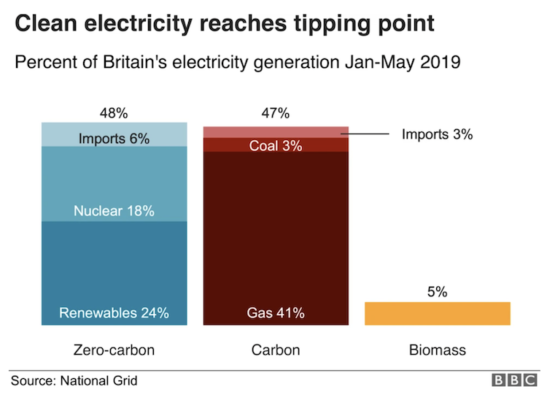
How much of the UK’s energy is renewable, and how does it stack up against the rest of the world? In July 2024, Britain drew 47% of its electricity from zero-carbon sources — peaking at 88%. It’s proof that the country has made significant strides in its quest for a sustainable energy future.
The winds of change are blowing across the United Kingdom — quite literally. Our country has carved out a notable position in the renewable energy sector, breaking records with wind power generation and making significant strides to reduce our dependence on coal.
Source: BBC
While the transition to renewable energy has been underway since the 1990s (with modest forays into hydroelectric power), it wasn’t until 2019 that the percentage of renewable energy in the UK hit a major milestone. After decades of depending on coal, for the first time, more energy was generated from zero-carbon sources than fossil fuels — a significant achievement in our journey towards achieving Net Zero by 2050.
Related Reading: 5 Simple Steps To Achieving Net Zero
But how is the UK’s renewable energy effort doing now? We take a deep dive into:
- The UK’s current energy mix
- Where the UK stands in the international rankings
- The key drivers behind the country’s renewable energy push
- The challenges and opportunities that lie ahead.
What Percentage Of UK Energy Is Renewable
According to the National Grid ESO, zero-carbon sources made up 47% of the UK’s electricity supply in July 2024 — peaking at 88% on the noon of July 4. Other key figures on the country’s renewable energy mix include:
- Coal accounted for just 0.5% of electricity generation, resulting in 128 consecutive coal-free hours.
- The lowest carbon intensity recorded was 28gCO2/kWh, occurring on July 4 at 14:00.
- Wind energy was a significant contributor in July, providing 21.3% of the UK’s electricity. This was second only to coal at 24.1%.
Offshore wind energy, generated by wind farms out at sea, is perhaps the UK’s biggest renewable energy success story. We are the second-largest offshore wind market in the world, accounting for over 40% of Europe’s offshore wind capacity.
The Crown Estate’s Offshore Wind Report 2023 provides a breakdown of record-breaking achievements and significant milestones:
- Offshore wind produced a record 49 TWh of green electricity, enough to meet the electricity needs of half of all UK homes.
- Offshore wind now accounts for 17% of the UK’s total electricity generation, an increase from 14% in 2022.
- The UK hosts 43% of all European offshore wind capacity within its waters.
- Dogger Bank, the world’s largest offshore wind farm under construction, began generating electricity for the first time.
This shift to renewable energy isn’t just a matter of numbers — it’s a signal of the country’s evolving energy identity. Solar power and biomass also play crucial roles, diversifying the renewable energy mix and illustrating a robust and growing renewable energy sector that is reshaping the UK’s energy landscape.
Related Reading: Five Steps To Improve Energy Efficiency
What’s Driving The UK’s Renewable Energy Push?
Several factors fuel the UK’s impressive renewable energy momentum:
- Government Policies and Support: The UK government has set ambitious targets, such as achieving net-zero emissions by 2050 and phasing out coal-fired power plants. These commitments are backed by subsidies, grants, and tax incentives designed to spur innovation and attract investment in renewable technologies.
- Technological Advancements: Rapid development in wind turbine technology, particularly offshore, has increased efficiency and reduced costs. Innovations in solar panel technology and energy storage also contribute to the sector’s growth.
- Private Sector Investment: The private sector also plays a vital role, with companies investing billions into renewable energy projects and building sustainable supply chains. UK businesses are projected to increase sustainability spending by 260% between 2018 and 2030 and 13% year-on-year between 2025 and 2030.
- Public Support and Activism: Public awareness and activism around climate issues have increased significantly. This groundswell of support has pressured both the government and corporations to prioritise sustainable energy solutions.
Related Reading: Government Drives Towards A Net-Zero Carbon Future
Book a callback to learn more about our compliance and supply chain risk management services.
Request A Callback
The UK’s Global Ranking In Renewable Energy
Despite record growth and increased investment in renewable energy, the UK still has a ways to go on the global stage.
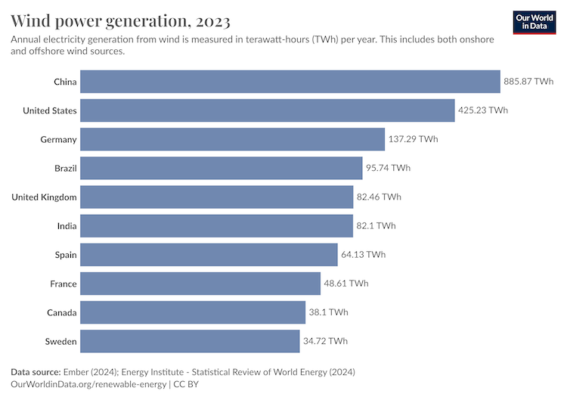
The UK Is Fifth In The World For Total Wind Power Generation
Whilst Britain’s offshore wind capacity is indeed the largest in Europe, we currently rank fifth in total wind generation in 2022.
Source: Our World in Data
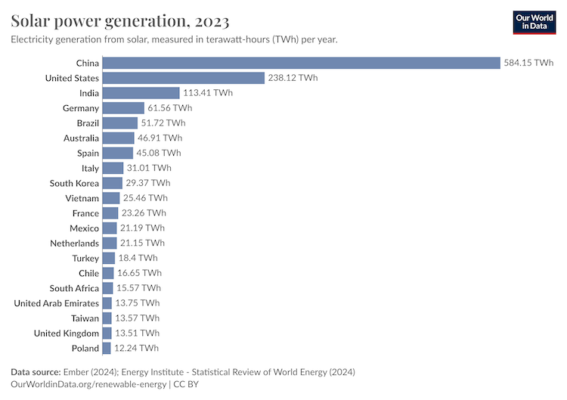
The UK Is Only 19th In The World For Solar Power Generation
Things get worse when comparing solar power generation. The UK is 19th in the world, generating just 13.5 terawatt hours (TWh) of solar power in 2023.
Source: Our World in Data
The UK Is Sixth In The World for Fossil Fuel Consumption Per Capita
While renewables now significantly contribute to our electricity generation, fossil fuels remain a crucial part of our energy grid. The UK is sixth in the world for fossil fuel consumption per capita — behind the US, Australia, Germany and China.
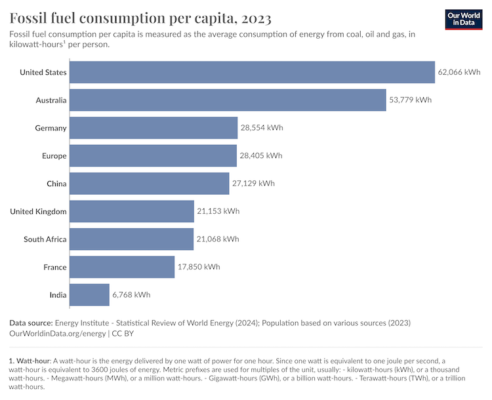
Source: Our World in Data
But it’s not all bad news. The UK’s renewable strategy stands out for its diversity. Unlike countries that heavily lean on a single renewable source, the UK has developed a balanced energy portfolio that includes wind, solar, and biomass.
This diversified approach reduces the risks associated with the intermittency of renewable sources, such as the variability of wind and solar power, positioning the UK as a resilient and adaptable player in the global energy market.
Challenges And Opportunities Ahead
Despite its achievements, the UK’s path to a fully renewable future is not without obstacles. Key challenges include:
- Grid Capacity and Modernisation: The UK’s ageing grid infrastructure is not fully equipped to handle the increasing influx of renewable energy. Upgrading the grid to improve capacity and efficiency is essential for integrating more renewables.
- Energy Storage: Renewable sources like wind and solar are intermittent, creating a need for advanced energy storage solutions to maintain a stable and reliable energy supply.
- Policy and Regulatory Hurdles: Navigating the evolving landscape of energy regulations can be complex, requiring continuous adjustments and strategic planning by both the government and private entities.
Related Reading: How The Landscape Of Risk Management In The Energy Industry Has Evolved Over The Years
However, these challenges also present numerous opportunities:
- Emerging Technologies: The UK is well-positioned to lead in emerging technologies like hydrogen power and tidal energy, which could further diversify its renewable energy portfolio.
- Expansion of Offshore Wind: By expanding its offshore wind capacity, particularly with floating wind farms, the UK could exploit deeper waters and tap into stronger wind resources.
- International Collaboration: The UK can leverage its expertise in renewable energy to foster international partnerships, further solidifying its position as a global leader in the field.
Building A Renewable Energy Roadmap For The Future
As the world grapples with the urgent need to transition to sustainable energy, the UK’s renewable energy push serves as a powerful example of what’s possible. With continued innovation, supportive policies, and strategic investments, local enterprises are well-positioned to drive global advancements in renewable energy.
The future holds challenges and opportunities, but the UK’s path for businesses and government agencies is clear: lead by example, harness the power of renewables, and build a cleaner, more resilient future for all.
Keep up to date with the latest developments in sustainability through CHAS Insights. The Veriforce CHAS team is here to help you take the next step and integrate sustainable business practices (including transitioning to renewable energy sources) into your supply chain.
Take the CHAS Social Sustainability assessment and benchmark your organisation against a broad range of ESG (Environmental, Social and Governance) topics.
Request a callback and learn more about CHAS Social Sustainability.

