

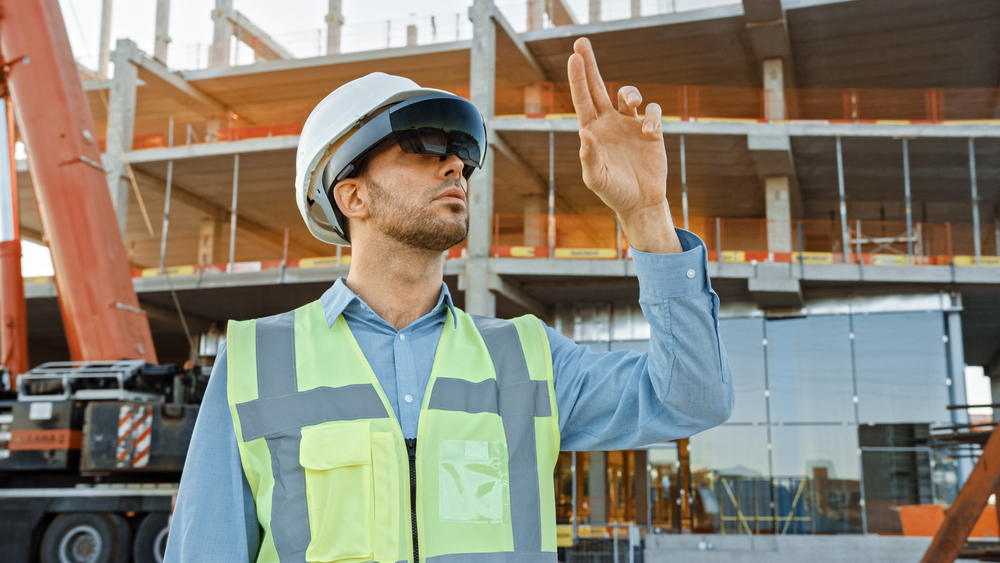
Unsurprisingly, the construction industry tops the list of hazardous industries in the UK. With so many workplace accidents on construction sites, safety measures that can stop the increase in accidents and help mitigate the volume of accidents help to protect workers’ lives and wellbeing.
The latest report from HSE highlighted an increase in the number of fatal injuries, rising to 45 in 2022/23, upward from an annual average of no more than 37 between 2018 and 2022. Over three years, from 2020 to 2023, 53,000 workers suffered non-fatal injuries. These statistics show a need for methods to improve construction site safety.
From remote monitoring to wearable devices, technology continues to improve safety in construction. Safety protocols such as protective headgear advancements are one of many measures being implemented to help with risk management practices on sites. Technology is bringing innovative solutions to construction sites safely.
In this article, we’ll delve into the world of construction technology to explore the latest innovations in enhancing safety on construction sites. We’ll examine specific examples where technology has made a remarkable impact and discuss its benefits to the industry.
Historical Context Of Construction Safety
Construction firms take safety training seriously and prepare workers for any possible risks. The training helps workers stay safe and helps with company risk management practices to maintain a low level of risk during working hours. Traditional practices have included PPE (Personal Protective Equipment such as gloves, hard hats, and safety boots) and regulatory compliance.
For a culture of safety, compliance regulations help companies stick to rigid safety standards and avoid any penalties.
The limitations of traditional safety practices lead to an increased risk of human error playing a role. Without real-time monitoring to watch for potential hazards, safety gets compromised. This causes a delayed response time on raising the safety issues before potential injuries occur.
In 2020, Gallup and Lloyd’s Register Foundation found startling data from a global survey that collected 125,000 responses from interviews in 121 countries. Around 600 million of the 3 billion workers worldwide had reported being seriously injured at work.
The advent of innovative technologies has had a transformative impact on construction site safety. Wearable devices, such as smart helmets and vests, have emerged as game-changers. An employee’s vital signs can be monitored, for example, while on site, which can trigger alerts for a swift response in the event of an accident. The technology here is fast to report issues and the worker’s location at the scene of an accident or working in a hazardous area.
Virtual reality (VR) and augmented reality (AR) technologies have made safety training more immersive and effective. Workers can now participate in virtual simulations replicating real-life construction scenarios, helping them identify and respond to potential hazards on site.
Related Reading: Guide To Workplace Health And Safety Training In Construction
Free Risk Assessment Template
Take the stress and confusion out of creating a risk assessment with our free template.
Enter your details, and we’ll email you a risk assessment template that’s both compliant and comprehensive to use.
By submitting this form you confirm you are happy to be contacted by CHAS in accordance with our Privacy Policy
Key Technologies Revolutionising Construction Safety
The use of technology in construction has revolutionised construction site safety standards and compliance. These key technologies are playing a role in securing worker safety and the long-term success of construction projects.
Real-Time Monitoring And Data Analysis
Real-time monitoring offers a big step towards increased safety on construction sites. Sensors can keep an eye on conditions that threaten the safety of workers. These sensors can monitor air quality, temperature changes, and noise levels and flag hazardous issues. This reduces risks by enabling prompt action to prevent and stop any hazards.
Wearable Devices And IoT Integration
Wearable devices, like smart helmets and vests, are equipped with sensors that track vital signs and location. These devices provide instant alerts in case of emergencies. This allows for a swift response and improves overall worker safety. Integrating Internet of Things (IoT) devices allows for seamless communication between workers, machinery, and supervisors. This advancement provided by technology enhances coordination and safety. For example, IoT devices can notify workers of hazardous weather conditions or machinery malfunctions, reducing the risk of accidents.
Virtual Reality And Augmented Reality
Virtual reality (VR) and augmented reality (AR) technologies are being used in safety training programs. Workers can be immersed in realistic virtual environments where they learn to identify and respond to potential hazards. This allows for practical, hands-on training without exposing workers to actual risks.
Drones And Automated Equipment
Drones equipped with cameras and sensors can monitor construction sites from above, providing a comprehensive view of the area and identifying potential safety concerns. This aerial technology will find potential safety concerns, such as unstable structures or unauthorised personnel in restricted areas. This real-time data empowers construction companies to take immediate action and prevent accidents.
Automated equipment, such as self-driving construction vehicles, minimises the need for human involvement in hazardous tasks. Towards better risk management, this further reduces the risk of accidents and injuries.
Building Information Modeling (BIM)
BIM is a digital representation of a construction project that integrates various data sources, including architectural plans, structural details, and safety information. BIM software allows for the identification of safety issues early in the design phase, facilitating the implementation of preventive measures and ensuring that safety is built into the project from the start.
These technological advancements have significantly contributed to improving safety in the construction industry. The overall benefit of these advancements is in providing real-time information and enhancing communication and coordination. Technology is constantly evolving and will develop further in enabling proactive measures to mitigate risks.
Related reading: A Guide To Hazard Identification And Management
Case Studies: Technology In Action
Technology has moved away from being just a nice-to-have addition in construction. It’s now a key driver for safety improvements. Here are examples of how technology faced challenges and delivered solutions that have revolutionised safety measures on many UK construction industry projects.
Crossrail Tunnel Leverages Drones For Enhanced Safety:
- Project: Crossrail, a major underground railway development in London.
- Challenge: Ensure worker safety and monitor progress efficiently in deep and confined tunnel environments.
- Solution: High-resolution drones equipped with LiDAR and thermal imaging sensors remotely surveyed ventilation shafts and tunnel cavities, detecting potential hazards and improving working conditions. This drone-powered approach boosted safety by minimising manual inspections in high-risk areas.
EXSKALLERATE — Accelerating Exoskeleton Adoption In Construction and Manufacturing:
- Project: EXSKALLERATE – Boosting Exoskeleton Use in the EU.
- Challenge: Tackling the €240 billion annual cost of musculoskeletal disorders (MSDs) affecting 44 million workers in the EU.
- Solution: The EXSKALLERATE project, funded by InterrReg North Sea Region, aimed to increase exoskeleton adoption in manufacturing and building industries to reduce occupational health issues and enhance SME competitiveness. Partners from 6 North Sea Region countries collaborated to create a leading exoskeleton ecosystem.
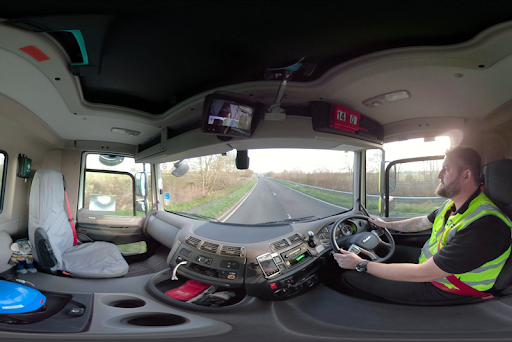
Travis Perkins Trained 1,000 Drivers with Virtual Reality
Source: Professional Builders Merchant
- Project: Travis Perkins has utilised virtual reality (VR) technology to train over 1,000 drivers across its CCF, BSS, and Keyline businesses.
- Challenges: Enhancing the learning experience for the Group’s Certificate of Professional Competence (CPC) compliance training, recognised by the FORS scheme. Another challenge is highlighting the transformative impact of virtual reality in areas such as walk-around checks, fuel efficiency, vehicle maneuvering, and road risk challenges.
- Solution: The training, delivered through group workshops, included the provision of virtual reality goggles and workbooks for each participating driver, ensuring their progress was monitored and signed off by facilitators. Significant benefits observed included saving more than 466,000 litres of fuel in 2018 through improved fuel efficiency. The integration of this innovative approach to learning proved successful, contributing to a positive environment and paved the way for future safety training opportunities.
The Crucial Role Of Data In Enhancing Safety
Data collection plays a crucial role in identifying and mitigating safety hazards on construction sites. By systematically gathering data on accidents, near misses, and safety incidents, construction companies can identify patterns, assess risks, and implement preventive measures.
The use of sensors and connected devices enables construction companies to collect and analyse data on:
- Various environmental conditions,
- Equipment performance,
- Worker behaviour.
- Accidents,
- Near misses.
Construction companies can identify patterns, assess risks, and implement preventive measures. Analysing this data allows for targeted safety interventions and helps improve overall safety performance.
Technologies For Effective Data Management And Real-Time Monitoring
Cloud-based platforms and sophisticated data management systems enable efficient data collection, storage, and retrieval. Technologies, such as IoT sensors and wearables, provide this real-time data for proactive safety interventions and immediate responses to potential safety hazards.
Predictive Power Of Data In Preventing Accidents And Ensuring Compliance
By analysing historical data, companies can identify common causes of accidents. This is where the data is crucial in developing preventive measures to reduce the likelihood of future incidents. Companies can ensure compliance with safety protocols based on empirical evidence, creating safer working environments.
Related reading: Examples Of Common Assessment Standard Questions
Transforming Safety Training With Technology
In recent years, the use of digital tools such as virtual reality (VR) and online platforms has fundamentally transformed safety training. These innovative technologies offer a range of benefits over traditional approaches, making safety training more interactive and immersive.
Let’s delve deeper into this transformative trend.
Virtual Reality (VR): Creating Engaging Learning Experiences
VR has revolutionised safety practices and training by providing realistic and engaging simulations. Trainees can experience hazardous scenarios in a controlled environment, allowing them to develop critical skills and knowledge.
VR-based safety training enhances engagement, knowledge retention, and decision-making capabilities. This interactive approach creates a more authentic learning experience and prepares individuals to confidently handle real-life workplace challenges.
Online Platforms: Scalability And Accessibility
Online platforms have also played a significant role in transforming safety training. With the ability to deliver training materials remotely, organisations can train a larger number of employees while ensuring consistency and quality. These platforms provide flexibility, allowing learners to access training materials at their own pace and convenience.
Online safety training programs are proven to be effective in improving safety knowledge and behaviour. These platforms facilitate tracking and monitoring progress, enabling organisations to identify areas of improvement and provide targeted support.
Free Safety Method Evaluation Statement
Use our free safety method statement evaluation template to ensure your teams are health and safety compliant.
Enter your details and receive your free safety method evaluation statement template in your inbox.
By submitting this form you confirm you are happy to be contacted by CHAS in accordance with our Privacy Policy
Benefits Of Interactive And Immersive Training Methods
Compared to traditional approaches, interactive and immersive training methods offer several benefits:
- Increased Engagement: Interactive training methods captivate trainees’ attention and increase their learning motivation.
- Realistic Scenarios: VR and immersive simulations replicate real-life situations, enabling trainees to develop practical skills and experience potential hazards in a controlled setting.
- Efficient Learning: The hands-on nature of interactive training allows for faster learning and improved retention of safety protocols.
- Risk-Free Practice: Trainees can make mistakes and learn from them in a safe environment, fostering better decision-making and risk-management skills.
- Cost-Effectiveness: Digital training tools eliminate the need for physical resources and reduce training costs associated with travel and equipment.
The transformative impact of technology on safety training cannot be overstated. VR and online platforms have revolutionised training methodologies, providing engaging, scalable, and accessible learning experiences. Safety training will become even more tailored, effective, and adaptable to the evolving needs of the workforce.
Challenges And Considerations Of Technology In Construction Safety
These challenges include cost barriers, technical complexities, and workforce adaptation.
Implementing advanced technology in construction safety can be costly, particularly for smaller companies with limited budgets and may pose financial challenges. The cost of training staff to use and maintain the technology can also be a significant consideration.
Integrating new technology into existing construction safety processes can be technically complex. Systems may require compatibility with other tools and software used by different stakeholders. Ensuring seamless communication and interoperability between various technology platforms can be a challenge.
Introducing new technology often necessitates training and upskilling the workforce. This adaptation can be a challenge. Employees may be resistant to change or lack familiarity with the technology. Providing comprehensive training and ensuring ongoing support is crucial to successfully integrating technology into construction safety practices.
While technology offers numerous benefits, it is important to remember its role as a tool to enhance, rather than replace, human expertise and judgment. Construction safety involves complex decision-making, which requires human experience and critical thinking.
Technology should be used to support and augment human capabilities rather than solely relying on automated systems.
A Summary Of The Key Benefits And Challenges Of Technology In Construction Safety
Technology has brought significant benefits to construction safety practices, but it also presents challenges that need to be addressed for optimal implementation.
Here’s a summary of the key points:
Benefits:
- Improved Safety Standards: Technology enhances safety protocols, reduces accidents, and prevents injuries by providing real-time monitoring, data analysis, and predictive capabilities.
- Enhanced Efficiency: Digital tools streamline workflows, automate tasks, and improve communication, allowing for smoother project execution and better safety coordination.
- Training And Education: Virtual reality (VR) and online platforms offer interactive and immersive training experiences, improving engagement, retention, and decision-making skills.
- Cost-Effectiveness: Technology reduces costs associated with physical resources, training, and travel, making safety practices more affordable and scalable.
Challenges:
- Cost Barriers: The initial investment and ongoing maintenance of technology solutions can be expensive, particularly for smaller construction companies.
- Technical Complexities: Integrating and maintaining technology systems requires compatibility and expertise, often posing challenges for seamless implementation.
- Workforce Adaptation: Training employees to effectively use and embrace new technology can be met with resistance or lack of familiarity, necessitating comprehensive training and ongoing support.
To continue improving construction safety, ongoing innovation and technology adoption are imperative. Continuous advancements in artificial intelligence, the Internet of Things (IoT), and wearables can further enhance safety protocols, risk management, and response mechanisms.
Looking forward, technology will play an increasingly pivotal role in shaping safer construction practices. It’s vital to balance technological advancements and the valuable expertise, experience, and judgement of construction professionals.
With technology solutions, the construction industry can continue making significant strides in creating safer working environments and risk management compliance.
If you need help to improve your health and safety levels, then consider joining Veriforce CHAS now. Complete our award-winning health and safety assessments and demonstrate your compliance with the latest health and safety standards. To get started, look at the different CHAS membership packages available online or call our award-winning team on 0345 521 9111.
Are You Ready To Be A CHAS Client?
Sign up for FREE today or learn more about our client services by scheduling a callback with one of our friendly CHAS advisors.

