


Corruption is a trillion-dollar global problem; the UN estimates that bribes and stolen money amount to a staggering $3.6 trillion each year. But corruption is much closer to home than most people realise.
In the UK, the NHS Counter Fraud Authority (NHSCFA) estimates that fraud costs the NHS £1.27 billion each year. It’s an amount that could pay for “40,000 staff nurses, 5,000 frontline ambulances or 116,000 hip replacements”.
Corruption is a broad concept with many forms, such as:
- Bribery
- Embezzlement
- Tax evasion
- Cronyism
- Money laundering.
Whatever the case, corruption always has victims and often weakens institutions, impedes the delivery of basic services, causes job losses and hurts the environment.
But what many people don’t know is that corruption can start on a much smaller scale — often in your average business.
The construction sector, for example, has long been plagued by corrupt practices. The Organization for Economic Co-operation and Development (OECD) has flagged it as one of the most corrupt industries — second only to extraction (i.e., oil, gas and mining).
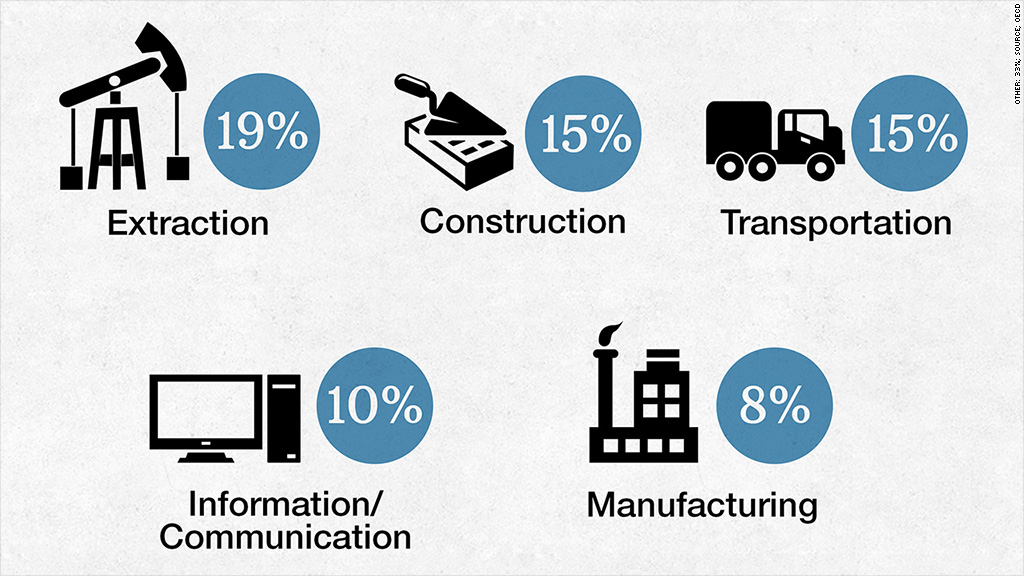
Percentage of International Bribery Cases by Industry
Image Source: CNN Money
One of the main reasons behind this problem is the often secretive nature of construction supply chains. With so many suppliers involved in a myriad of transactions, it can be difficult to have complete, end-to-end supply chain visibility. The less transparent your supply chain is, the more susceptible it will be to bribery and corruption.
However, these same risks extend to any business with complex supply chains and extensive networks of partner suppliers.
What Can Businesses Do To Protect Themselves From Bribery And Corruption?
Whether your business operates in construction, manufacturing, or transportation, there are concrete steps you can take to protect your organisation, particularly your supply chain, from corruption.
For starters, you can ensure your compliance with legislation such as the Bribery Act 2010. The law requires you to:
- Evaluate high-risk areas of corruption in your supply chain.
- Implement control measures where necessary.
- Communicate your anti-bribery and anti-corruption updates to stakeholders.
However, it can be easy to feel overwhelmed by the sheer amount of work involved in compliance. One way to make the task of mitigating corruption and bribery more manageable is to use supply chain risk management services, which provide accreditation schemes for anti-bribery and corruption, as well as other areas of risk management.
Gaining anti-bribery and corruption certification gives your organisation tangible proof that you’ve taken the necessary steps to prevent corrupt practices and have the controls in place to report them to the authorities when necessary.
Below are five core benefits of seeking anti-bribery and corruption certification.
1. It Forces You To Invest In Anti-Bribery And Corruption Training
Seeking accreditation for anti-bribery and corruption entails investing in the necessary training to educate your employees and other key stakeholders on the:
- Dangers of bribery, fraud and corruption
- Different forms that corruption can take
- Legal repercussions of bribery and fraud
- Ways to report bribery, corruption and fraud.
Training not only protects your organisation but also prevents employees from unknowingly aiding and abetting unscrupulous practices.
Pro Tip: The subject of corruption in supply chains can be a dry one to teach. We recommend contextualising your training to the specific scenarios that your employees deal with every day. This makes your training materials and lectures more resonant and easier to digest.
Don’t limit your training to class-based lectures. You can also provide eLearning modules about anti-bribery and corruption, allowing employees to learn at their own pace and absorb the material more effectively.
2. Accreditation Enhances Your Organisation’s Performance
Seeking accreditation requires establishing an anti-bribery and corruption risk-assessment strategy. This presents an opportunity for your organisation to identify unacceptable practices (for example, in a construction project) and demonstrates your willingness to comply with the Bribery Act 2010, the Modern Slavery Act 2015 and other relevant legislation.
Creating a strategy also means identifying measurable key performance indicators (KPIs) to monitor your operations. And as the adage goes, “What gets measured gets done”. This forces your organisation to monitor your anti-bribery and corruption KPIs and work towards continual improvement.
Pro Tip: The Bribery and Corruption Assessment Template recommends companies nominate a senior counter-corruption champion in the workplace to be responsible for promoting anti-bribery and corruption messages.
While your entire workforce should be aware of your anti-bribery and corruption risk-assessment strategy, it helps to have one person set the tone for your efforts to prevent and report unscrupulous practices.
Free Anti-Corruption & Bribery Policy Template
Hit your anti-corruption and bribery targets by learning how to complete an Anti-Corruption & Bribery Policy Evaluation.
Enter your details and get a free template in your inbox detailing everything you need to know to create a policy for your organisation.
By submitting this form you confirm you are happy to be contacted by CHAS in accordance with our Privacy Policy
3. It Improves Your Bottom Line
Identifying bribery and corruption risks should be a key component of any organisation’s corporate social responsibility (CSR) programme. Integrity resonates with consumers and brands concerned about the ethical practices of the organisations they buy from or work with.
Research by Marketo shows that 30% of business-to-business (B2B) buyers will avoid companies whose values don’t match their own. In fact, 68% said they are concerned about how a company treats its employees, whilst 64% only do business with brands that are fair to people throughout their supply chain.
Pro Tip: Accreditation provided through third-party assessment services like CHAS enables you to demonstrate to other organisations that you’re working on a concrete CSR programme. This can help your business win tenders and develop new strategic relationships with supply chain partners.
4. Accreditation Nurtures A Culture of Integrity
Gaining anti-bribery and corruption accreditation means that your organisation will have to nurture a culture of integrity within the workplace. Through training, advocacy and CSR activities, your business can support an environment where employees do the right thing and take the lead in building trust with your clients, supply chain partners and customers.
Pro Tip: Anti-bribery and corruption training is an ongoing effort. Don’t settle for having a one-off meeting about fighting corruption. Your training should keep up with the shifting landscape of anti-corruption policies and legal requirements.
5. It Protects and Reinforces Your Reputation
For contractors, gaining accreditation helps inspire confidence in clients and can positively impact your ability to win tenders. It also demonstrates your willingness to work with the authorities should there be an investigation of your operations.
For example, in the unlikely event of an unintentional bribery incident, you can use your accreditation as a show of good faith that you’ve taken reasonable measures to prevent bribery and corruption.
Pro Tip: Accreditation schemes that cover other key areas of risk management, such as anti-modern slavery in the workplace, can bolster your reputation further and show that you have done your supply chain due diligence.
Take the first step in protecting your business from bribery, corruption and fraud by joining CHAS and achieving the Common Assessment Standard.
As a CHAS Contractor, you will gain access to risk management tools, materials and nationally recognised accreditation programmes to mitigate risks in up to 12 key areas of risk management, including bribery and corruption. By becoming an accredited member, you can demonstrate your compliance with anti-bribery and corruption legislation to clients and prequalify for tenders and project opportunities.

